
Signature Pigment Care · Mellow Dermatology (Yeongdeungpo)
Melasma that keeps coming back,
seen differently from the depth up
The very same brown patch calls for a completely different approach depending on whether it sits in the epidermis or the dermis. From melasma and blemishes to age spots and moles, discover Mellow's signature pigment care, which designs wavelength and energy to match the type and depth of each pigment.
Pigment Types
Pigment isn't
just one thing
Melasma, blemishes, age spots and moles each differ in what causes them and how deep they settle. Only by first telling the types apart can the right treatment begin.
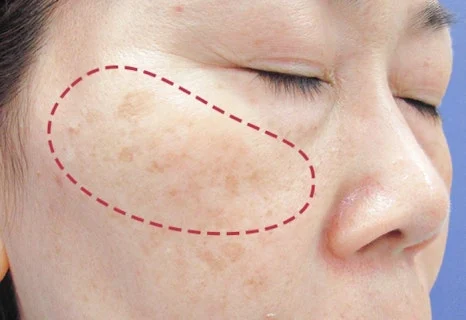
Type 01 · Melasma
Pigment reaching into the dermis
A brown-to-gray pigment sensitive to UV, hormones and heat, appearing symmetrically on both sides. Handled wrong, it easily recurs or worsens.
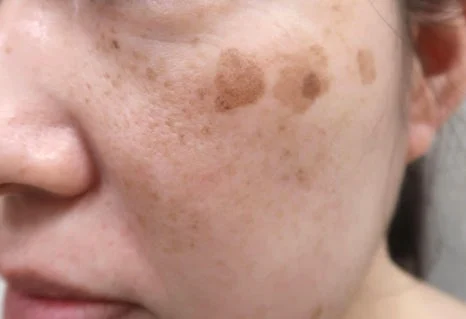
Type 02 · Blemishes & Freckles
Small pigment in the epidermis
Small, well-defined pigment caused mainly by cumulative UV exposure. Sitting in a relatively shallow layer, it responds well to lasers.
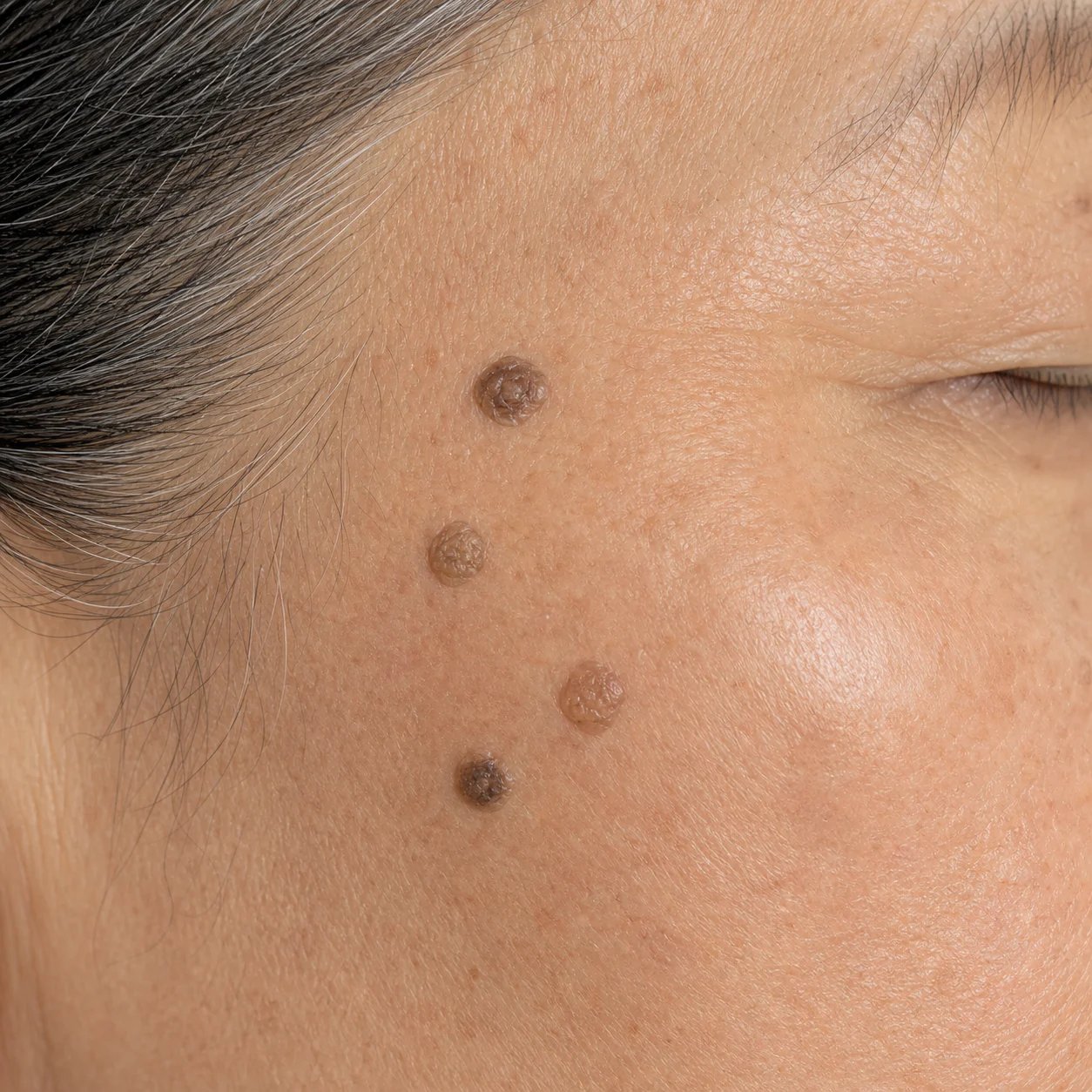
Type 03 · Age Spots & Lentigines
Dark, slightly raised spots
Epidermal lesions caused by photoaging and age. We clear them along with skin tone using toning, fractional and ablative lasers.
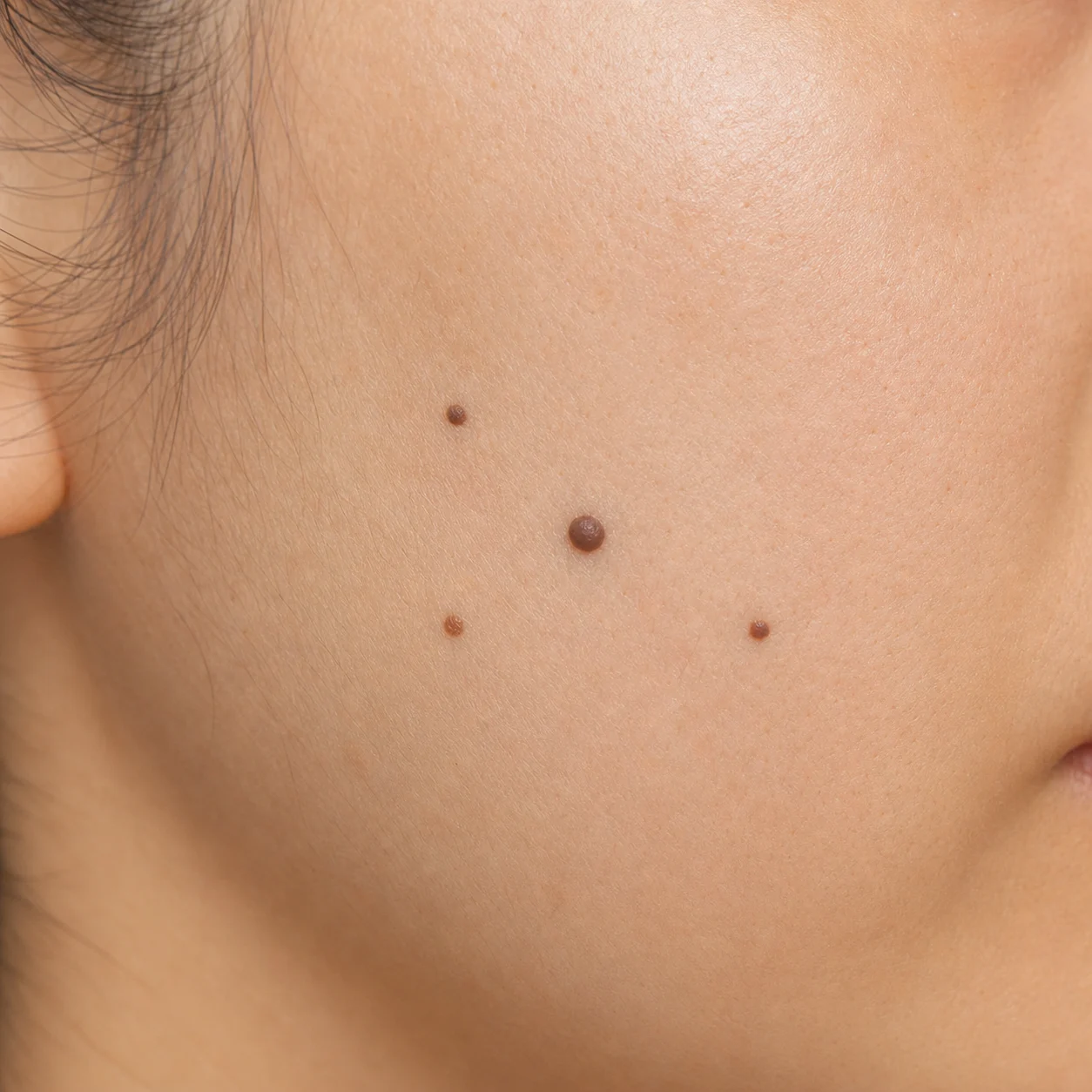
Type 04 · Moles & Raised Moles
Raised or dark moles
A one-day procedure removes them the same day with CO2 and Erbium lasers, matched to their depth.
Core Insight
The same pigment differs
by epidermis or dermis
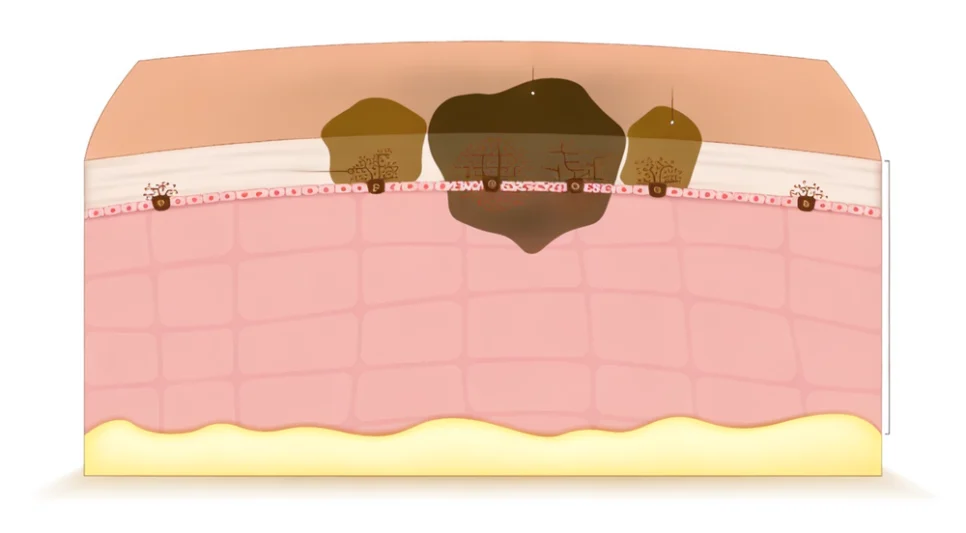
Epidermal pigment (blemishes, freckles, age spots) sits in the shallow layers of the skin and responds relatively well to lasers. Dermal pigment, on the other hand, lies deeper and calls for more precise wavelengths and multiple sessions.
Melasma in particular straddles both the epidermis and the dermis, and the melanin cells themselves are sensitive. Trying to erase it in one go with strong energy only irritates the cells, making it darker or bringing it back.
That is why melasma must be treated gently, at low power and in stages. Reading first how deep the pigment lies, then matching the wavelength and output — that is the heart of pigment treatment.
Toning
Three ways to
break down melanin
Pigment is not erased all at once; it is broken into fine particles so the body clears them on its own. The method varies with the length of the pulse.
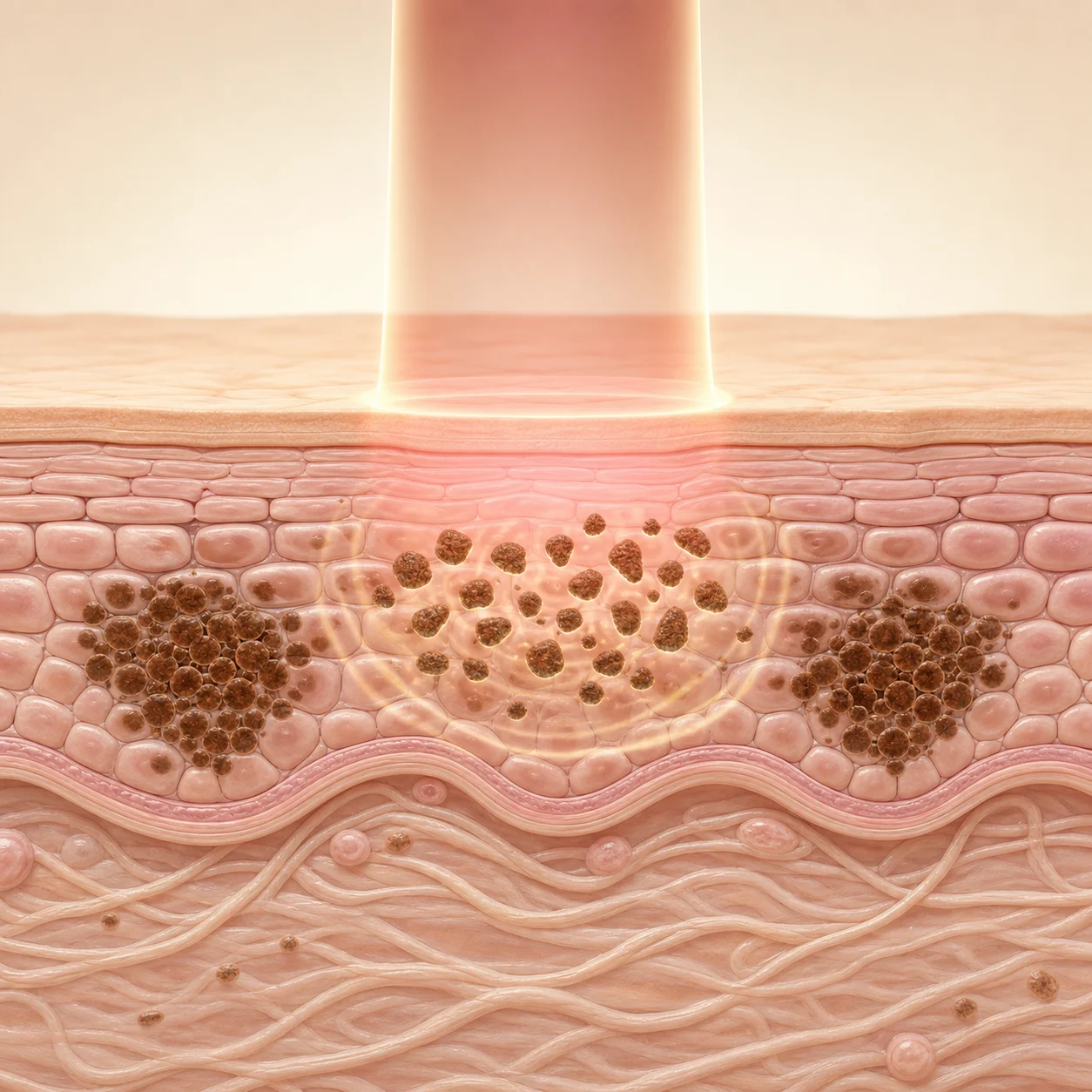
Nano-second
Laser Toning
A low-irritation method that breaks melanin into fine particles with nanosecond (ns) pulses. It gradually lightens pigment over multiple sessions.
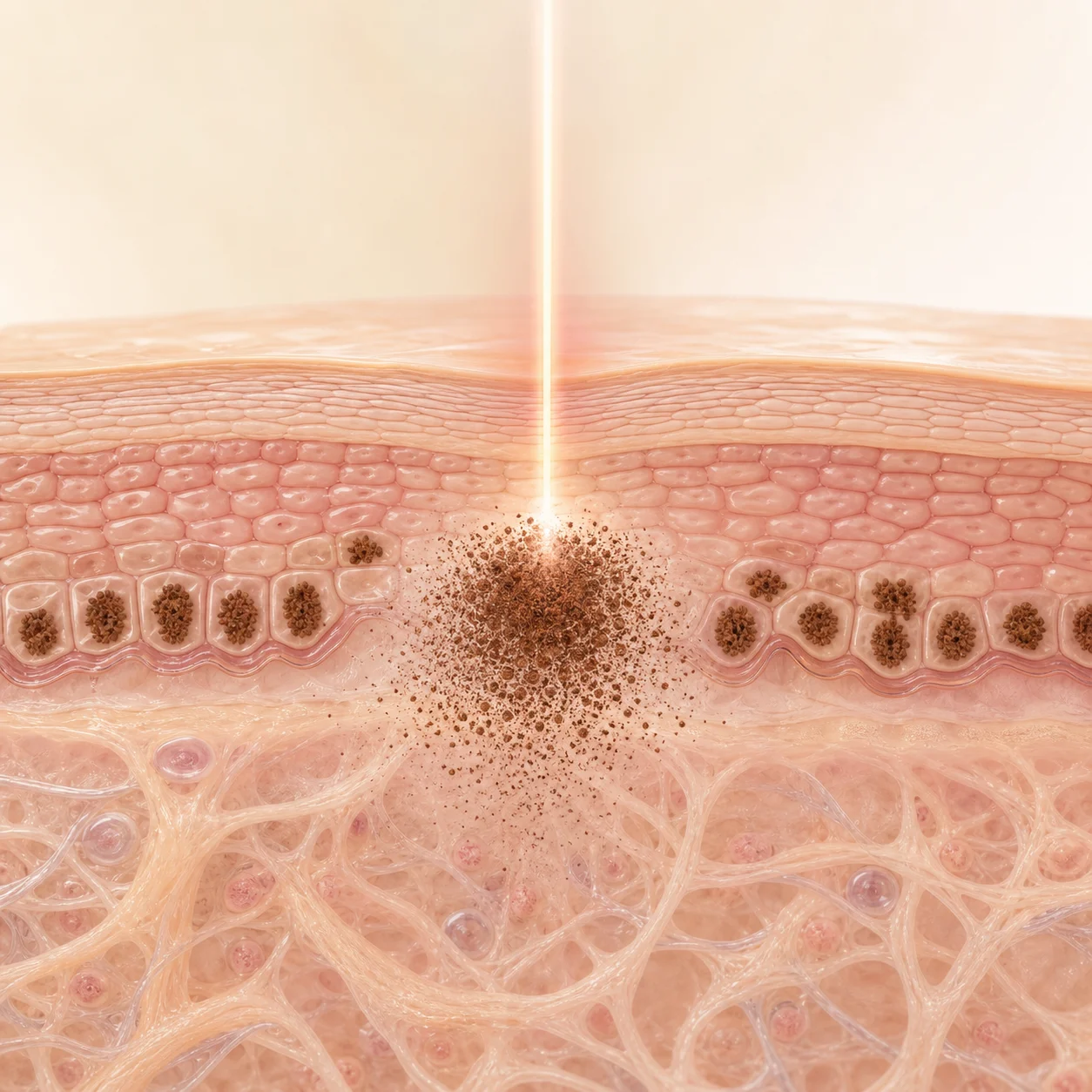
Pico-second
Pico Toning
Ultra-short picosecond (ps) pulses shatter pigment into even finer particles. Fewer sessions are needed, while damage to surrounding skin is kept to a minimum.
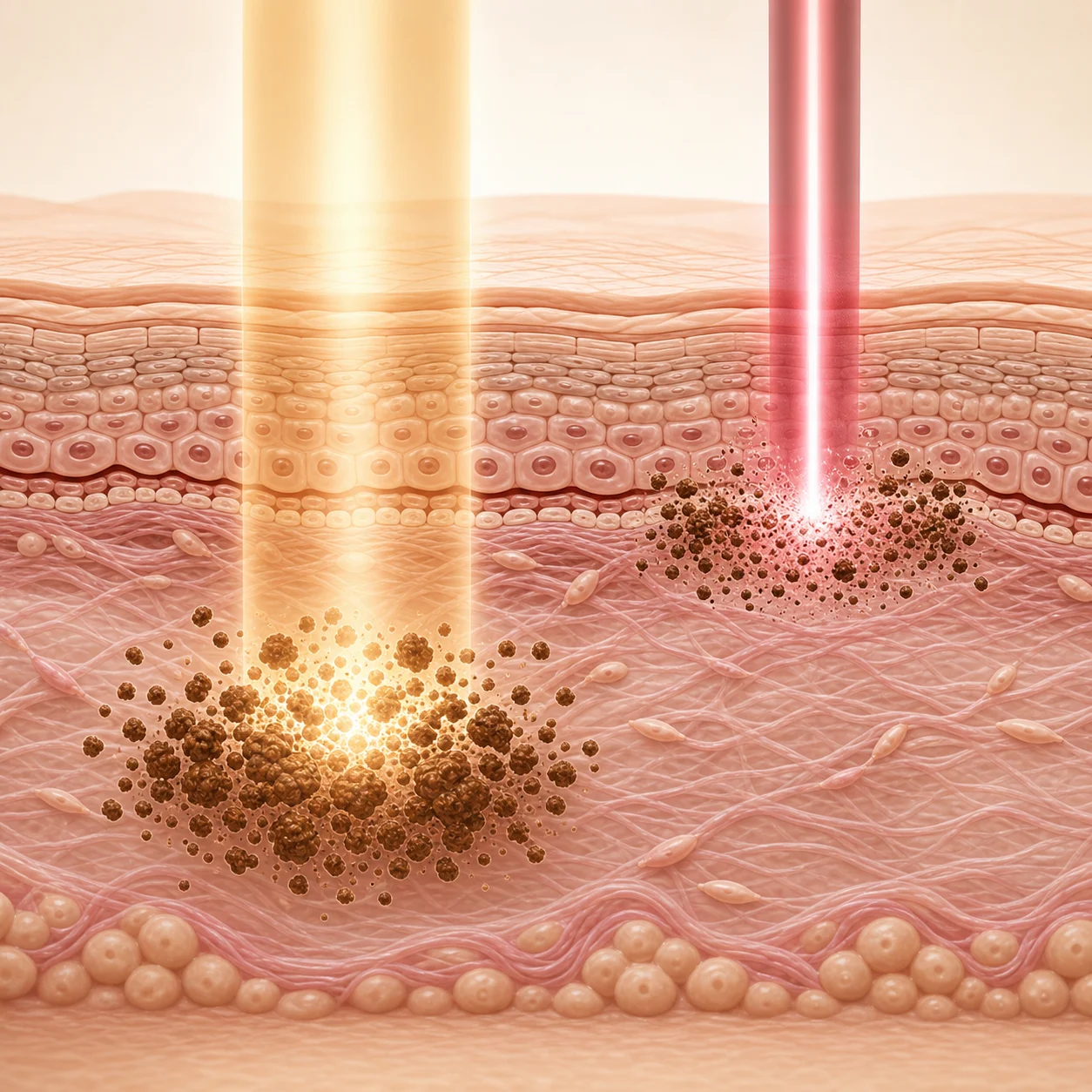
Dual
Dual Toning
Combines laser toning and pico toning to merge the strengths of both. Effective for mixed pigment and lowers the recurrence rate.
4-Step Protocol
From diagnosis to one-day removal,
through to aftercare
We design one seamless flow: a diagnosis that reads pigment depth and matches the wavelength, a one-day procedure that clears moles and age spots the same day, and aftercare that prevents recurrence.
Precise Diagnosis
Imaging analysis such as Mark-Vu checks the type and depth of pigment, and whether vascular lesions are involved.
Wavelength & Energy Design
We set the wavelength and output to match where the pigment sits — epidermis or dermis — and what kind it is.
Combined Lasers · One-Day
Toning and Pico break down pigment, while moles and age spots are removed the same day with CO2 and Erbium.
Aftercare & Recurrence Care
UV protection and brightening care reduce recurrence, and we adjust at each session by reviewing progress.
Devices
Combining wavelengths
to match pigment depth
Each pigment responds to a different wavelength and depth. Only by understanding each device's role and combining them does treatment leave nothing behind and irritate nothing.
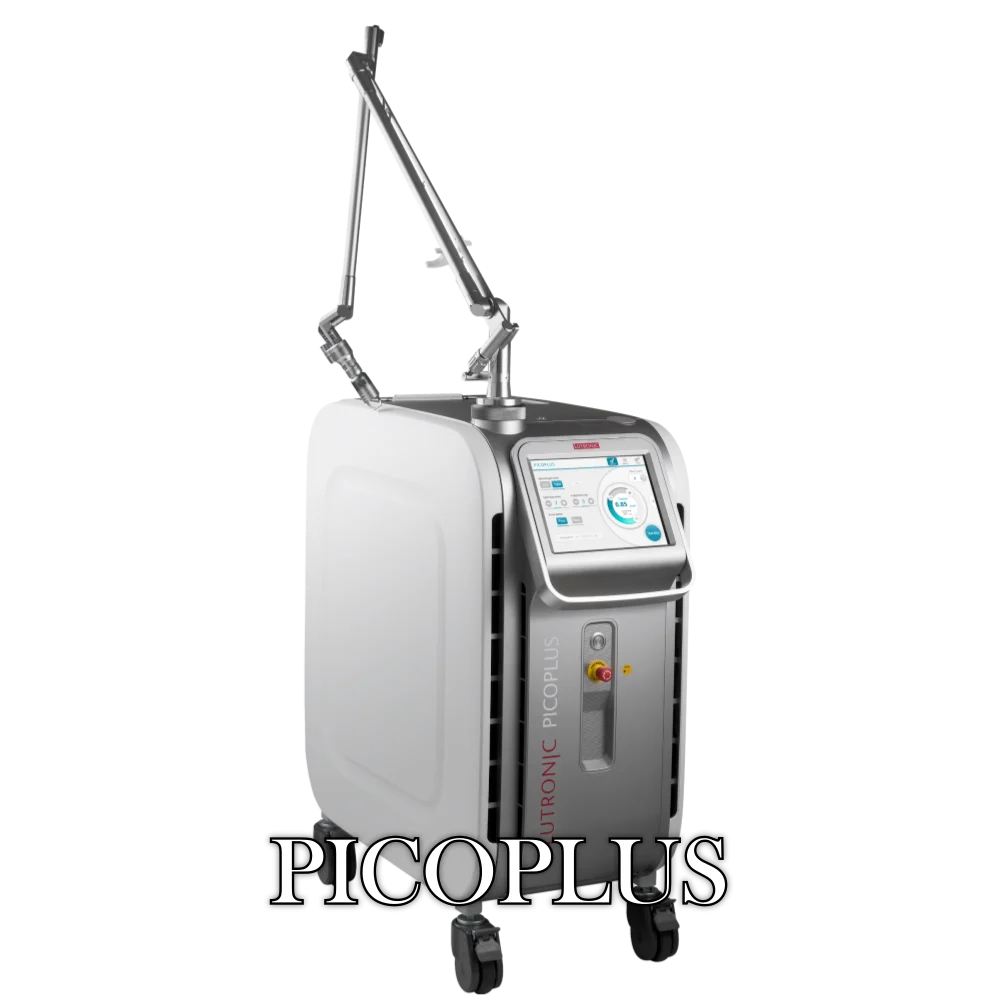
Pico Plus · Picosecond
PicoPlus
Pico ToningA picosecond laser that finely breaks down pigment with picosecond pulses. Its 532 and 1064 nm wavelengths lighten melasma and blemishes with low irritation, and it is strong against pigment that recurs often.
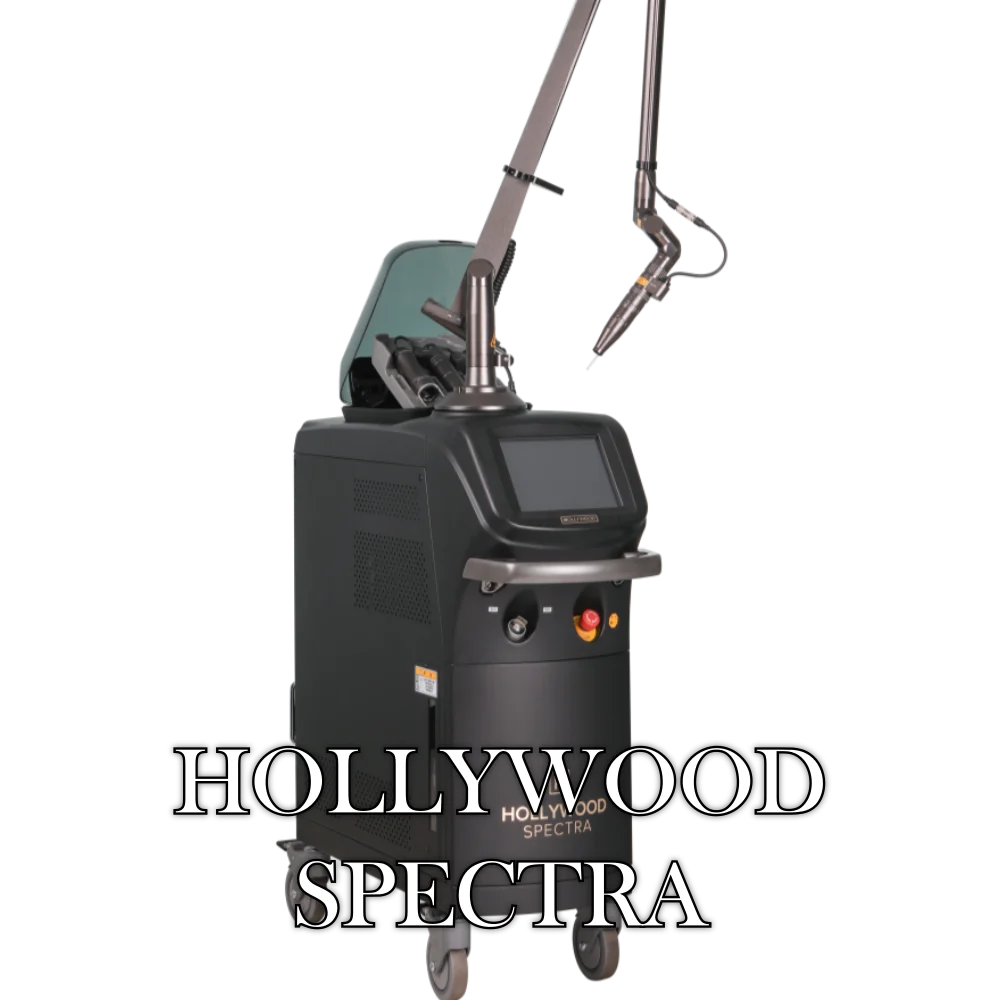
Hollywood Spectra · Nd:YAG
Hollywood Spectra
Laser ToningThe signature device for nanosecond laser toning. It breaks melanin into fine particles, evens out skin tone, and reaches dermal pigment step by step.
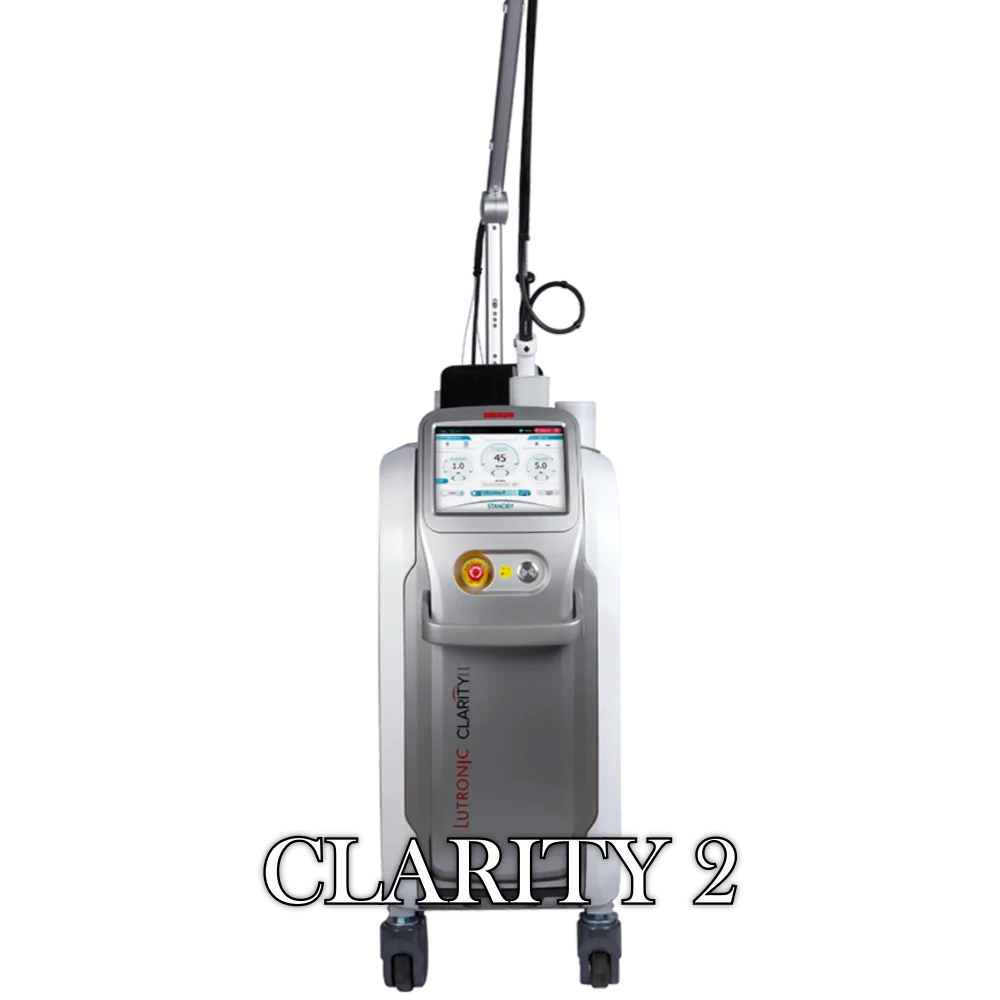
Clarity II · 755/1064nm
Clarity II
Dual WavelengthIts Alexandrite and Nd:YAG dual wavelengths address both superficial and deep pigment. It responds broadly to pigment and even vascular lesions.
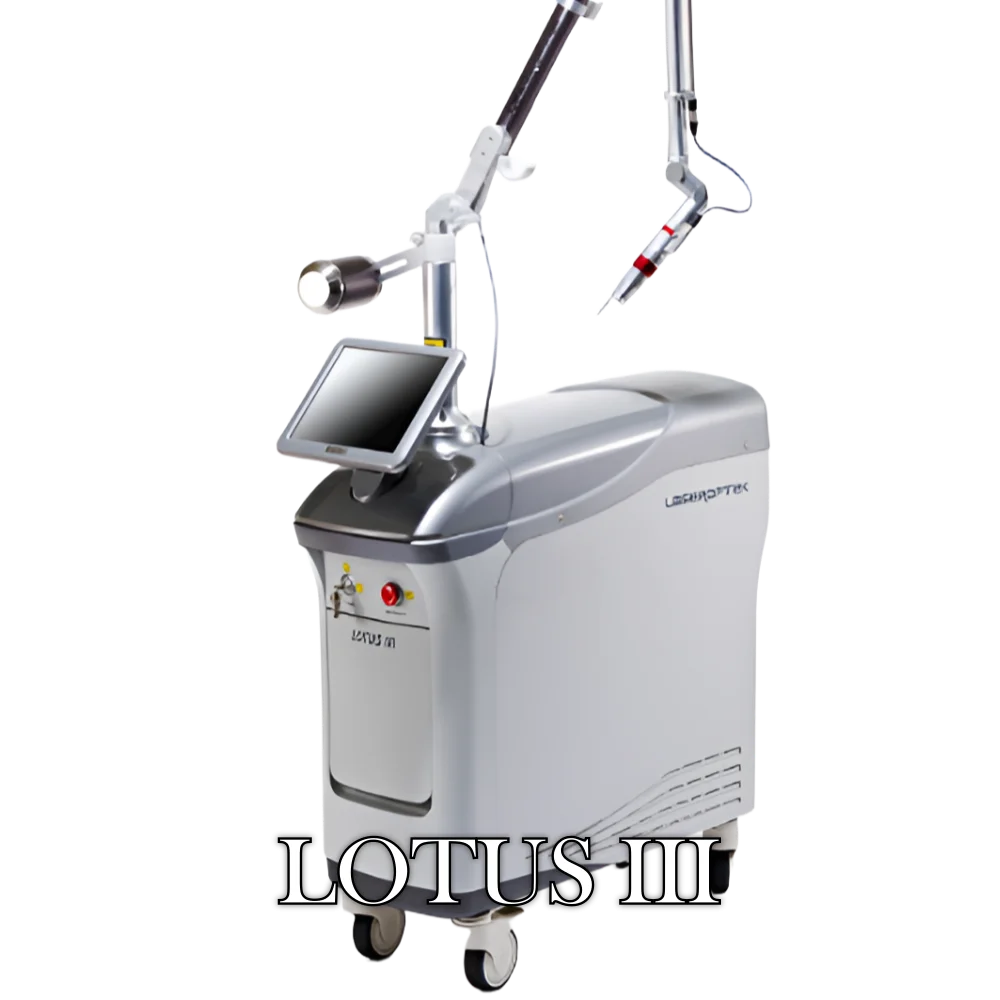
Lotus III · Erbium Fractional
Lotus III
Fractional ResurfacingAn Erbium fractional laser that precisely resurfaces epidermal age spots and blemishes while refining skin texture.
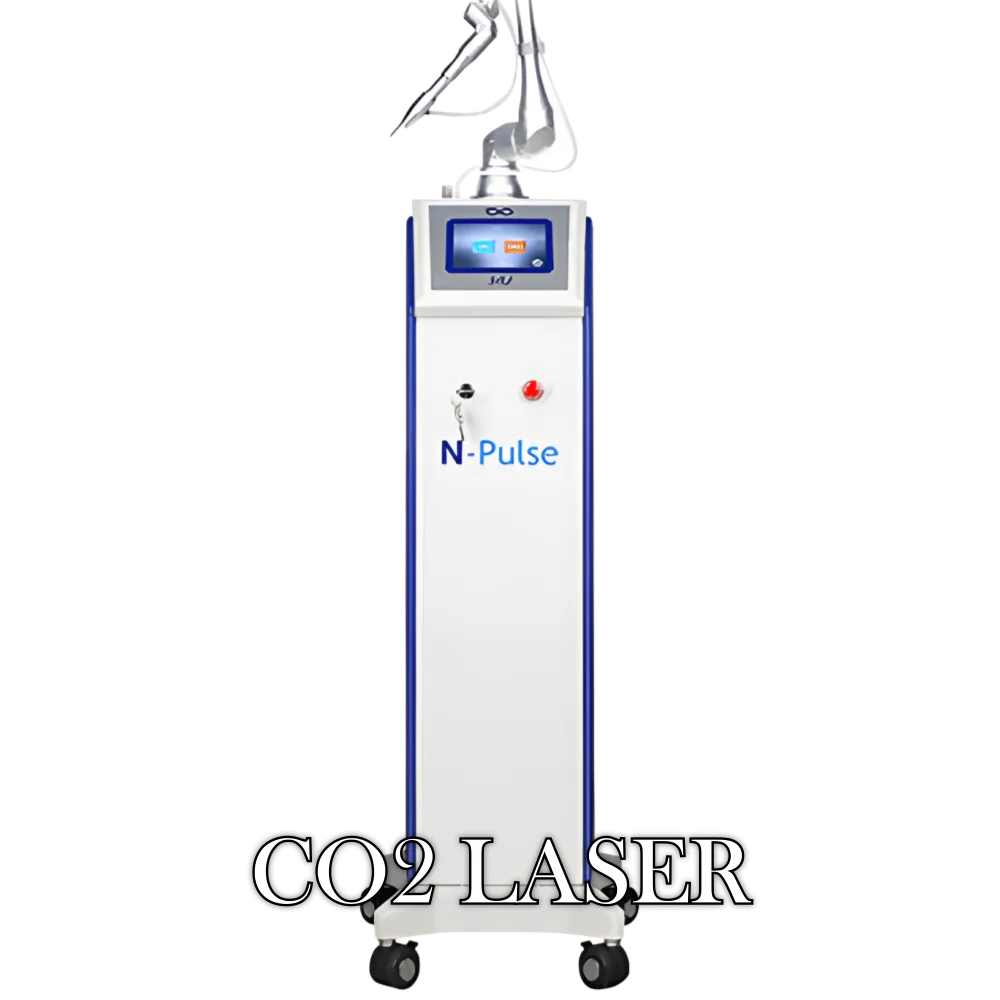
CO2 · Ablative Laser
CO2 Laser
Mole Removal · One-DayAn ablative laser that precisely removes moles and raised age spots according to their depth. Used for one-day mole and pigment removal.
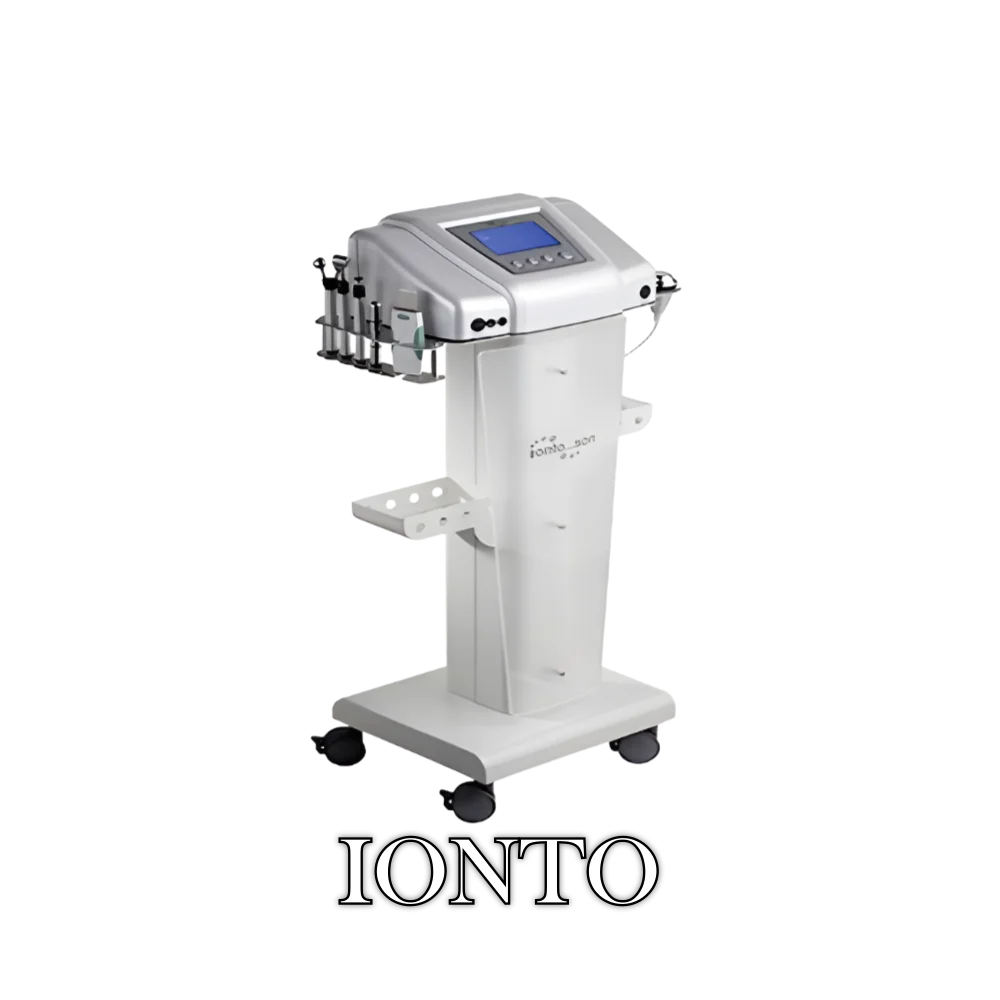
Iontophoresis
Iontophoresis
Brightening DeliveryA micro-current delivers brightening and soothing ingredients deep into the skin. A supportive care after toning that helps suppress pigment and manage recurrence.
At a Glance
The device lineup at a glance
| Device | Method | Key Targets |
|---|---|---|
| PicoPlus | Picosecond laser toning | Melasma, blemishes, recurrent pigment |
| Hollywood Spectra | Nanosecond laser toning | Melasma, skin tone |
| Clarity II | Alexandrite & Nd:YAG dual wavelength | Superficial & deep pigment |
| Lotus III | Erbium fractional resurfacing | Age spots, blemishes, skin texture |
| CO2 Laser | Ablative resurfacing | Moles, raised age spots |
| Iontophoresis | Micro-current ingredient delivery | Brightening, recurrence care |
※ Treatment results and responses may vary from person to person, and side effects may occur.
Real Results
Real treatment reviews
Real treatment reviews from patients who improved melasma, blemishes and lentigines at Mellow Dermatology (Yeongdeungpo). Tap a card to read the full review.
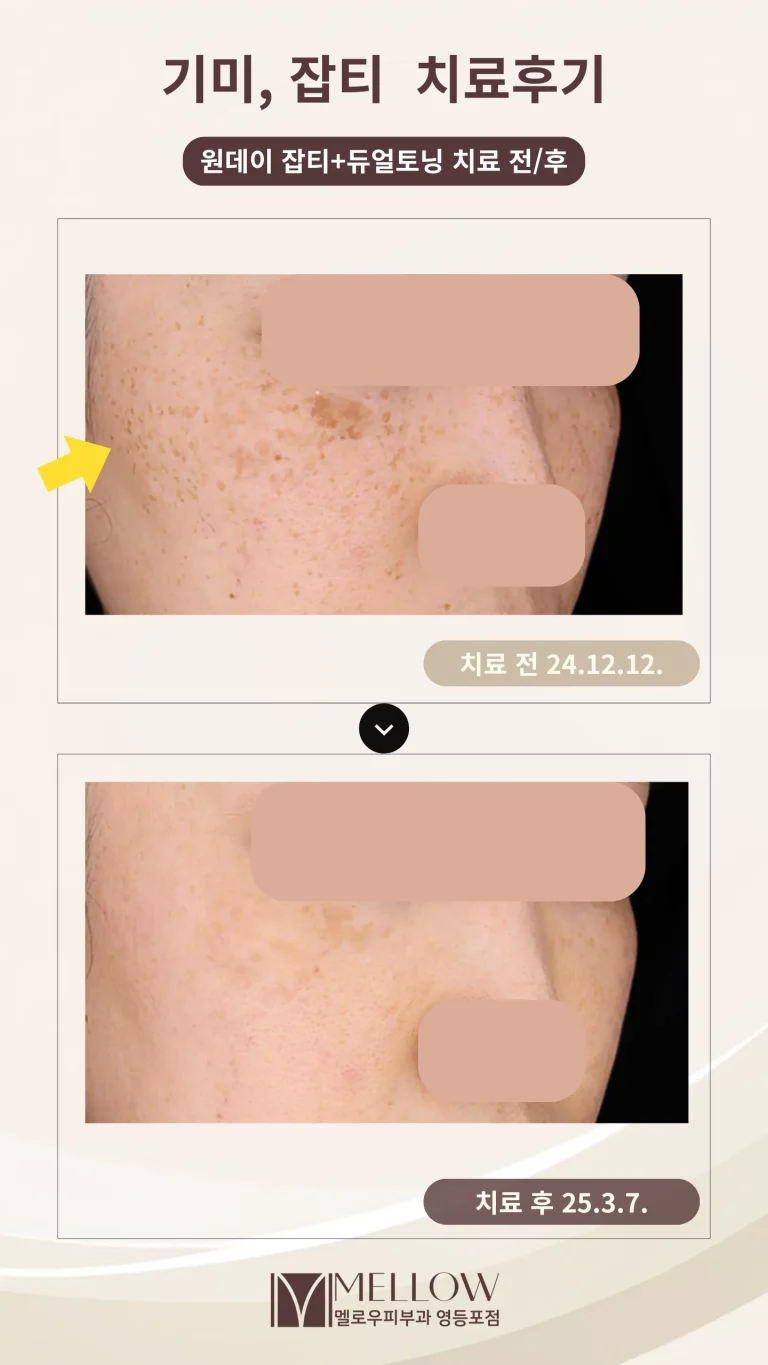
Treatment Review
Woman in her 40s: melasma & blemish laser toning review
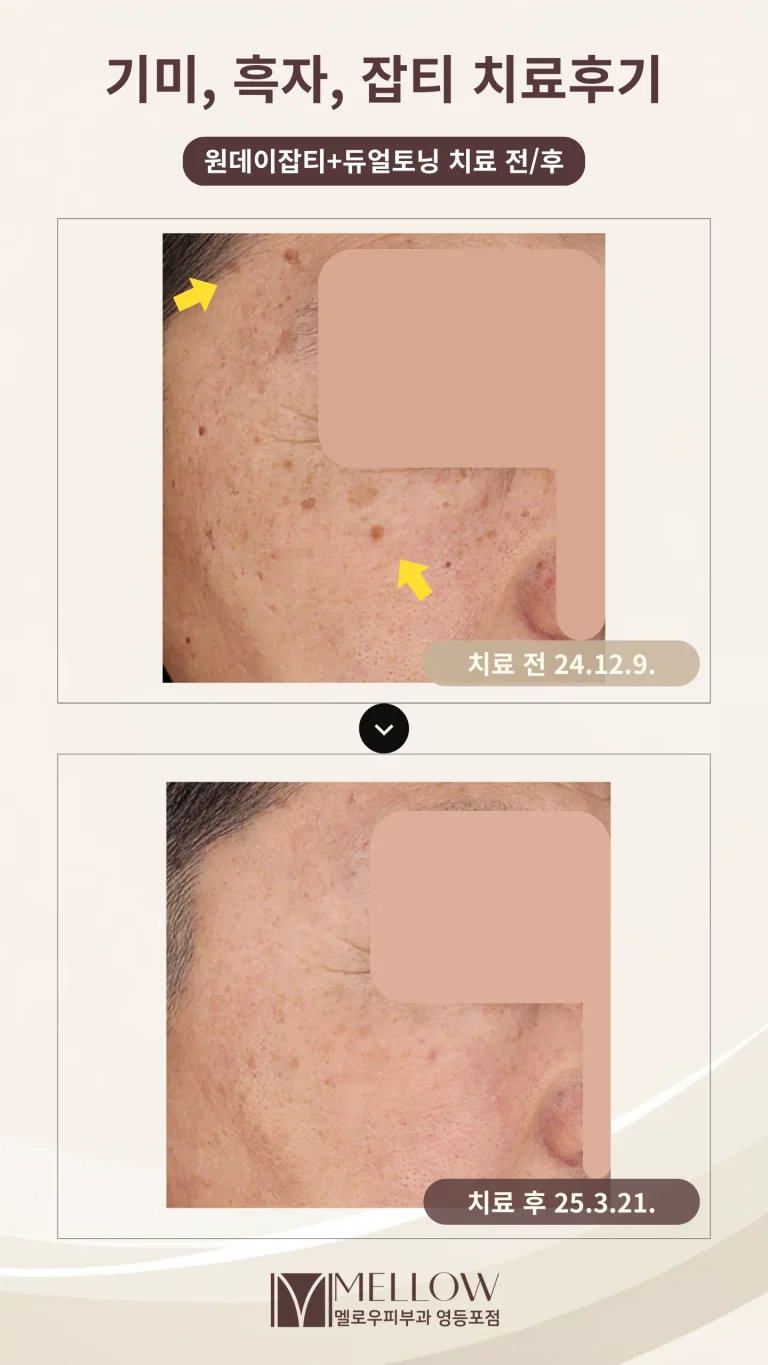
Treatment Review
Man in his 60s: lentigines, melasma & blemish treatment review
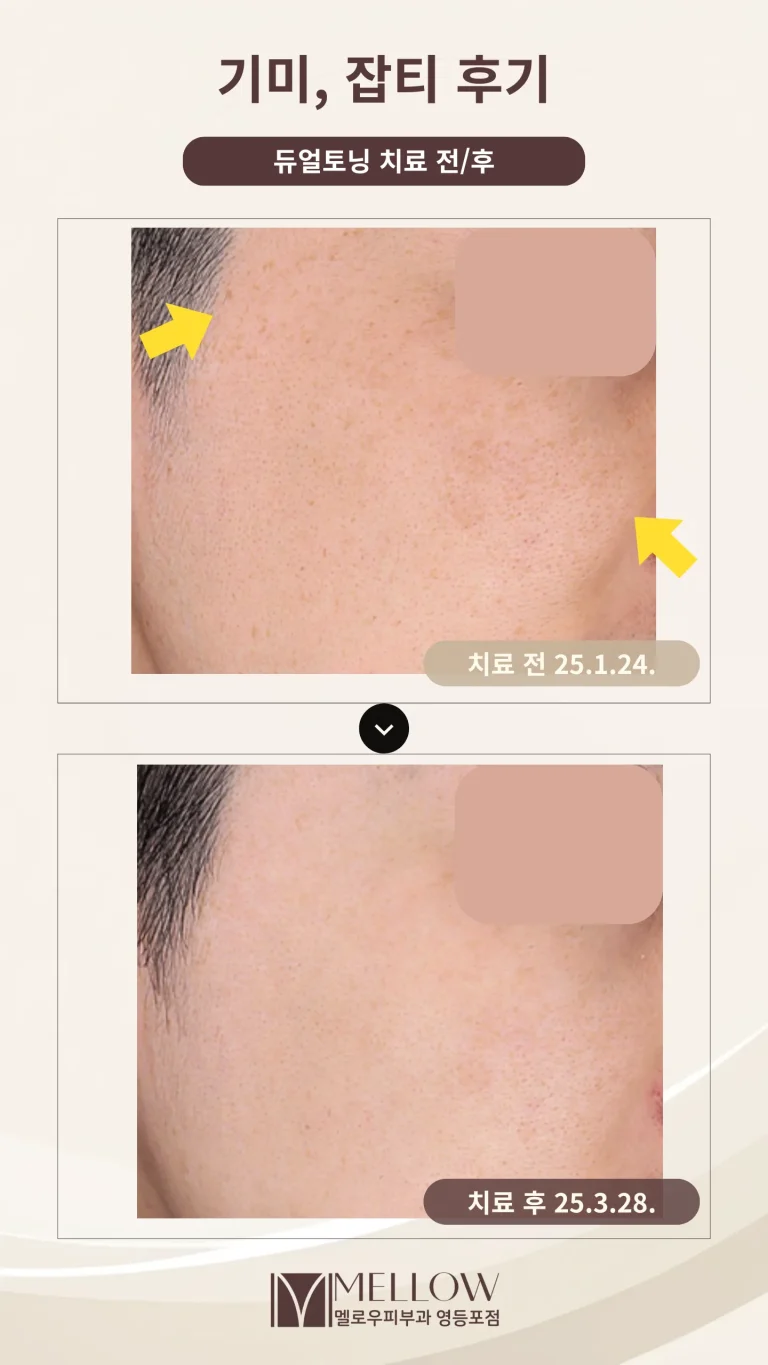
Treatment Review
Man in his 30s: melasma & blemish dual toning review
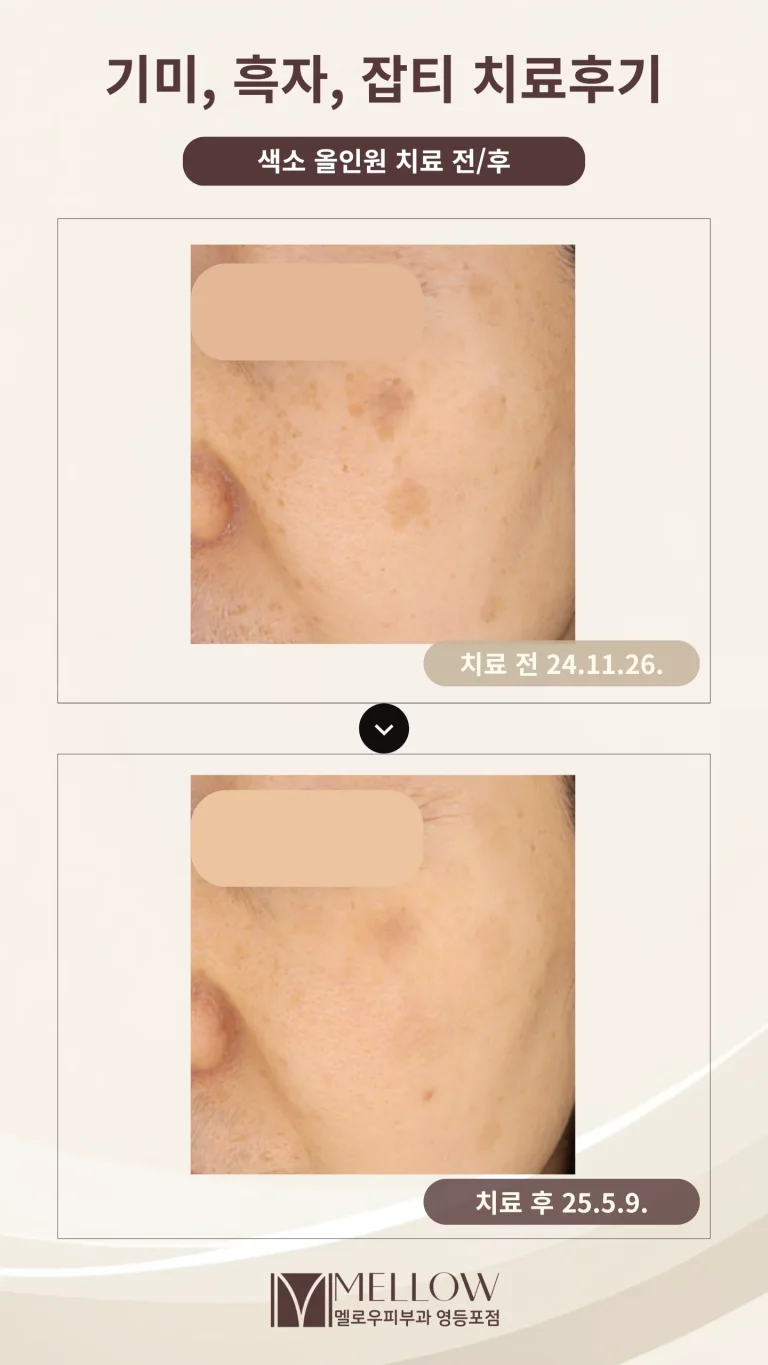
Treatment Review
Woman in her 50s: mixed melasma, lentigines & blemish treatment review
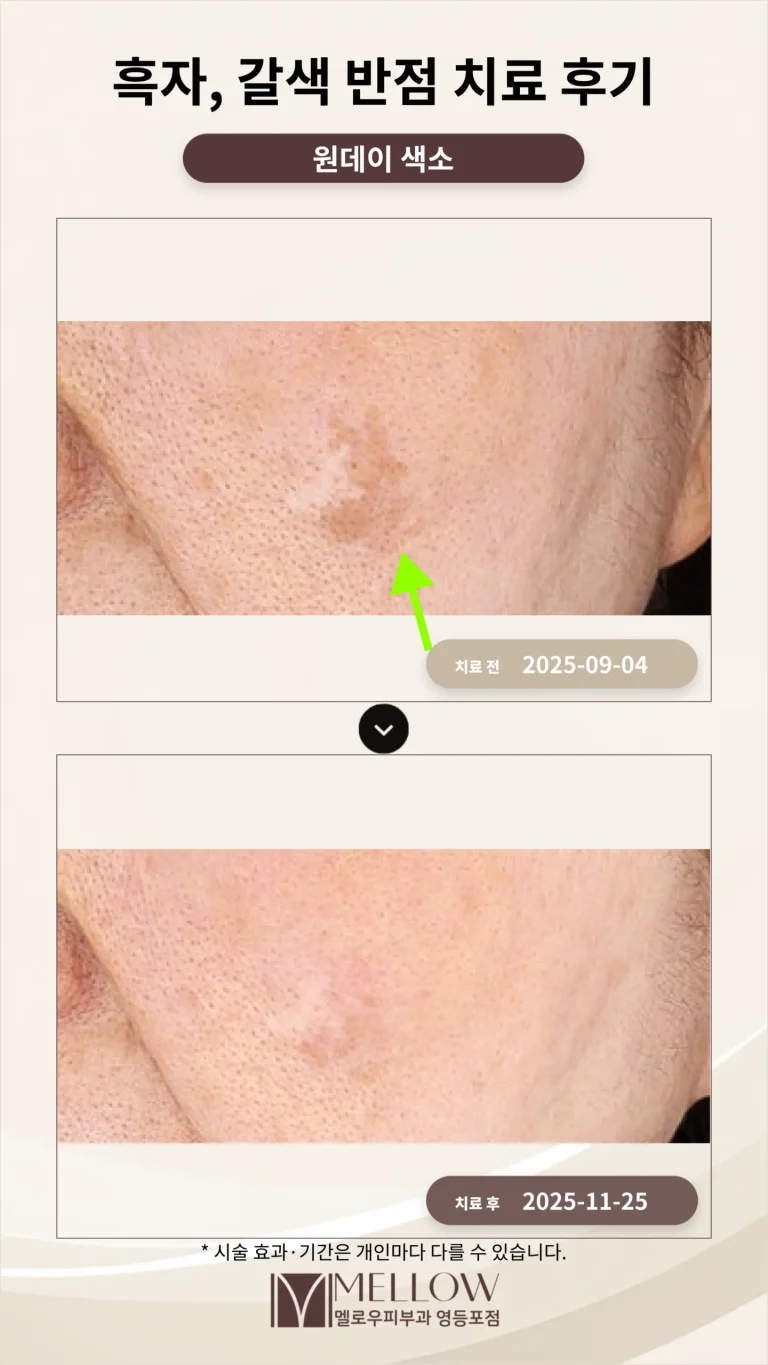
Treatment Review
Age 60s: lentigines & brown-spot one-day pigment review
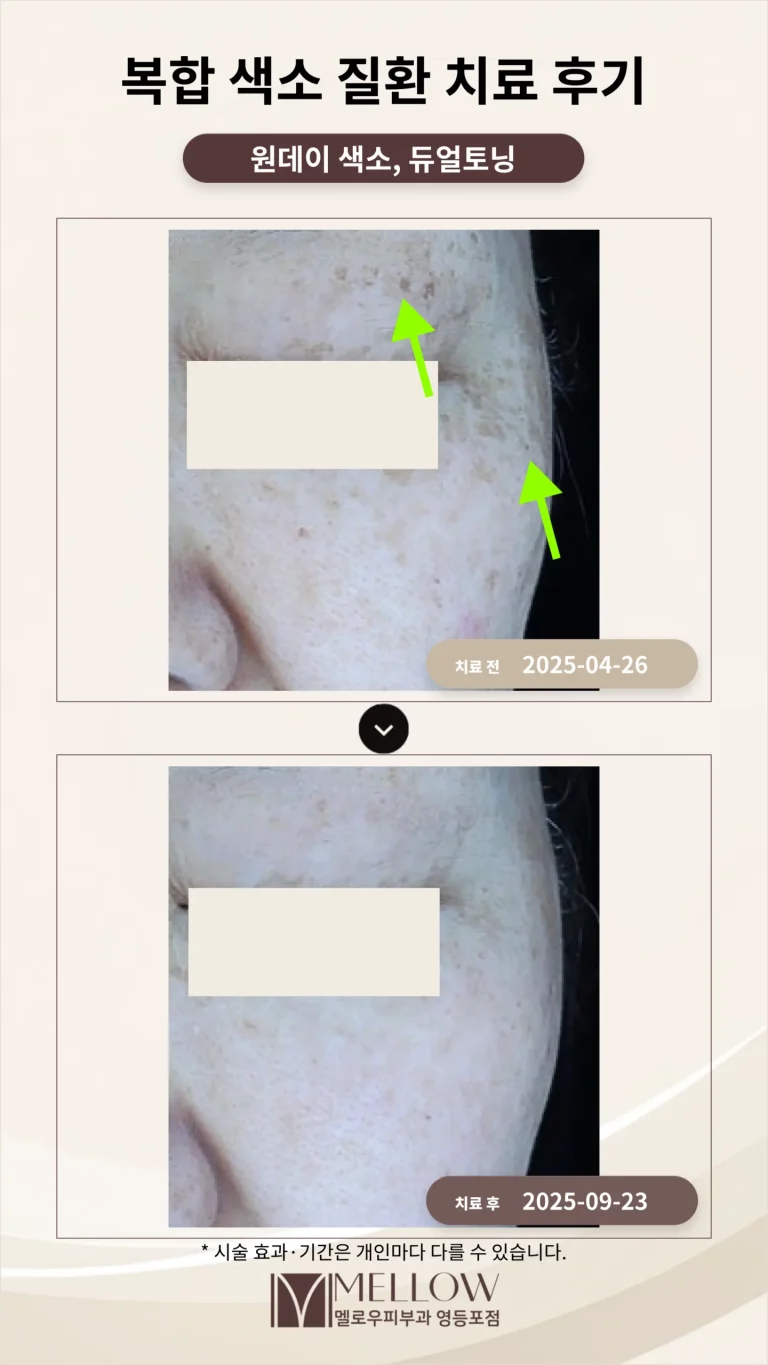
Treatment Review
Age 60s: combined pigment disorder treatment review

Expert Care
Pigment treatment is not erasing —
it is judgment
Dr. Kwon Hyung-il, Director · Board-certified Dermatologist
Pigment varies in both type and depth. Treat an epidermal blemish and dermal melasma the same way, and one is left behind while the other is irritated and returns.
Judging which wavelength, how much, and at what energy to treat according to the skin's condition — that expert design is what separates the results of pigment treatment. From diagnosis to the procedure and progress management, a specialist handles it personally.
★ Mellow Signature Pigment Care Principles
- Wavelength and energy tailored to the type and depth of each pigment
- Melasma treated gently at low power, in stages, without recurrence
- Moles and age spots removed in one day, with post-care brightening
Before & After Care
Half of pigment treatment is
UV care after the procedure
After a pigment procedure, temporary redness, swelling and itching may occur. Because UV is the single biggest cause of pigment recurrence, avoiding sun exposure for at least one week after the procedure, using sunscreen consistently, and keeping the skin moisturized are what determine the result.
Find the wavelength for your pigment
through a consultation
From melasma and blemishes to age spots and moles, find the treatment that fits you through Mellow Dermatology (Yeongdeungpo)'s precise diagnosis by pigment depth.
See treatment reviews →Equipment
이 진료에 함께 쓰는 장비
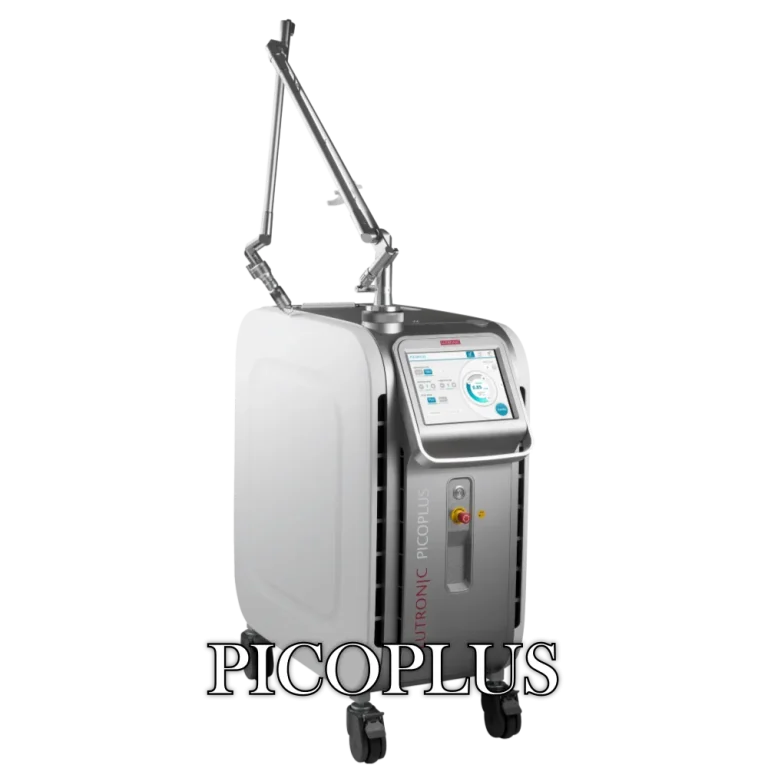
피코플러스
피코플러스는 피코초 단위의 아주 짧은 펄스로 색소 입자를 잘게 부수는 레이저로, 기미·잡티·주근깨와 피부톤 관리에 씁니다. 색소의 종류와 깊이에 따라 파장과 강도, 횟수가 달라지고, 기미는 자극을 받으면 오히려 짙어질 수 있어 정확한 감별이 먼저입니다.
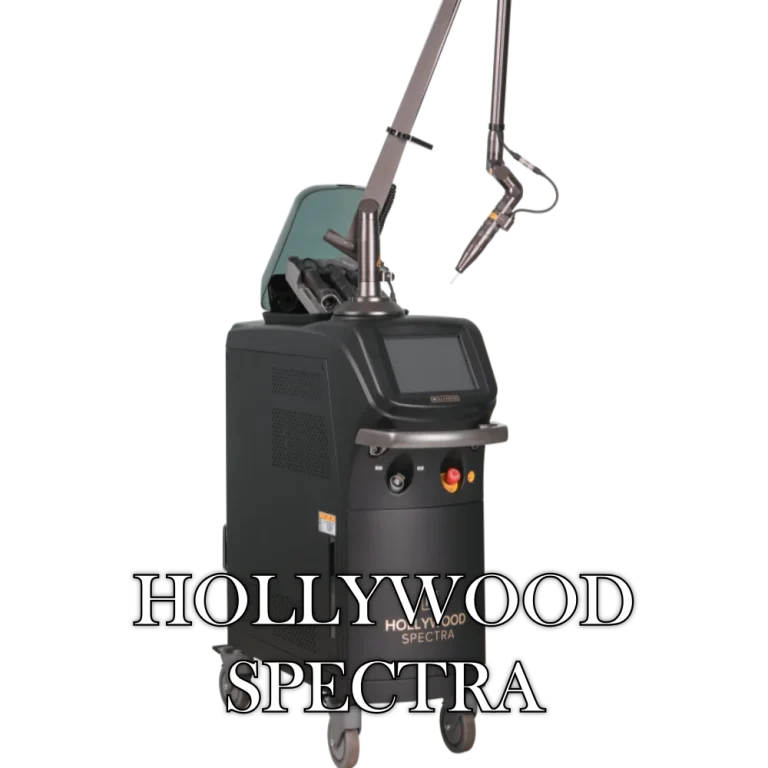
헐리우드스펙트라
헐리우드스펙트라는 1064nm와 532nm 파장의 Q-스위치 엔디야그 레이저로, 낮은 에너지를 여러 번 나눠 조사하는 토닝으로 기미와 잡티를 관리합니다. 탄소 로션을 쓰는 헐리우드필 모드로 모공과 피지 관리도 하며, 색소가 옅어지는 속도와 필요한 횟수에는 개인차가 있습니다.
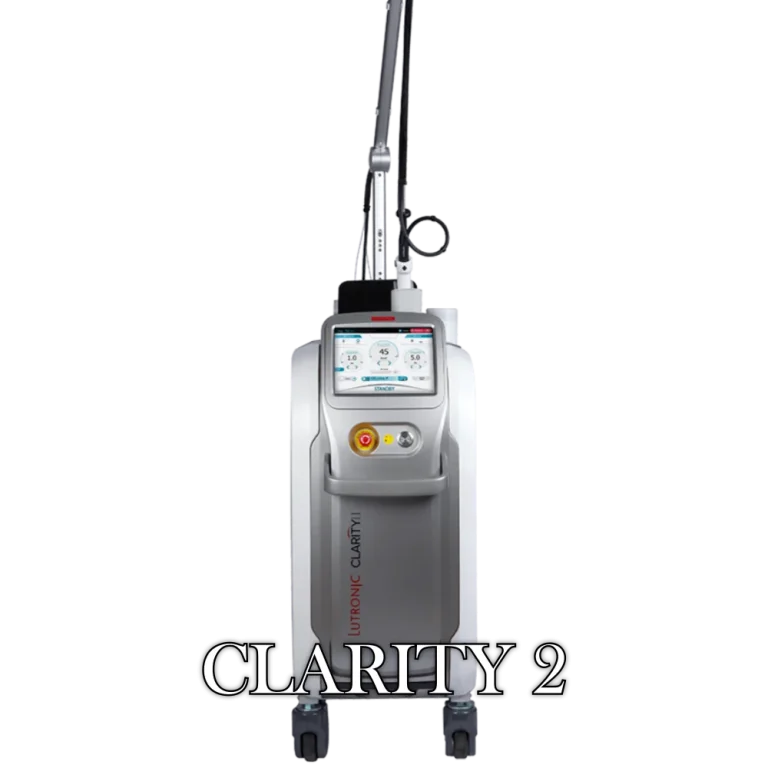
클라리티2
클라리티2는 755nm 알렉산드라이트와 1064nm 엔디야그 파장을 한 장비에서 바꿔 쓰는 레이저로, 주로 제모에 사용합니다. 피부톤과 모발의 굵기·색, 부위에 따라 파장과 에너지를 고르며, 필요한 횟수와 피부 반응은 사람마다 다릅니다.
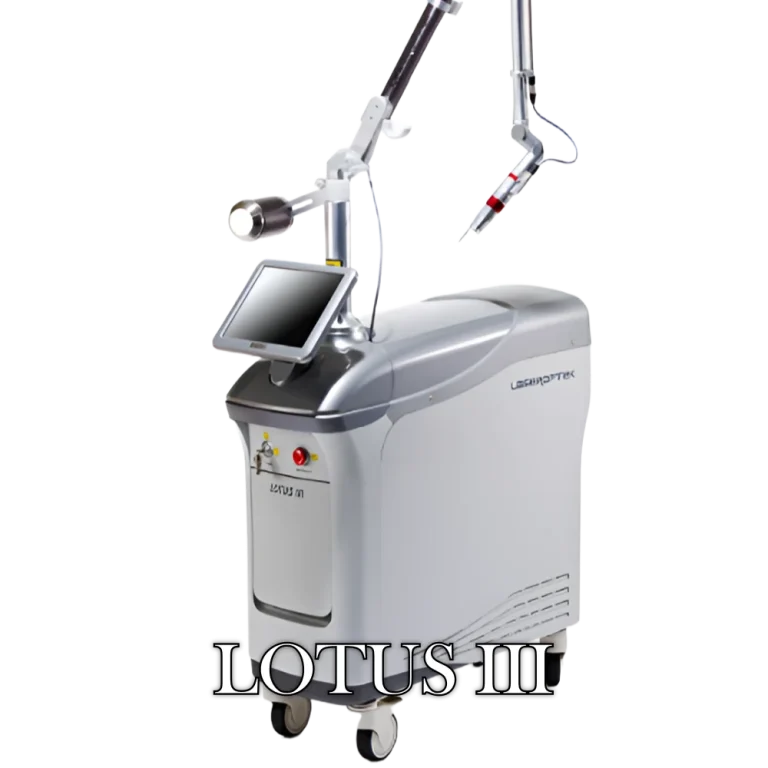
로터스3
로터스3는 2940nm 어븀야그 레이저로, 피부를 아주 얇고 정밀하게 깎아 잡티·비립종·쥐젖 같은 표면 병변을 없애고 피부결을 다듬습니다. 병변의 깊이와 부위에 따라 회복 기간이 달라지고 딱지나 붉음, 색소침착이 생길 수 있어 진단 후 범위를 정합니다.
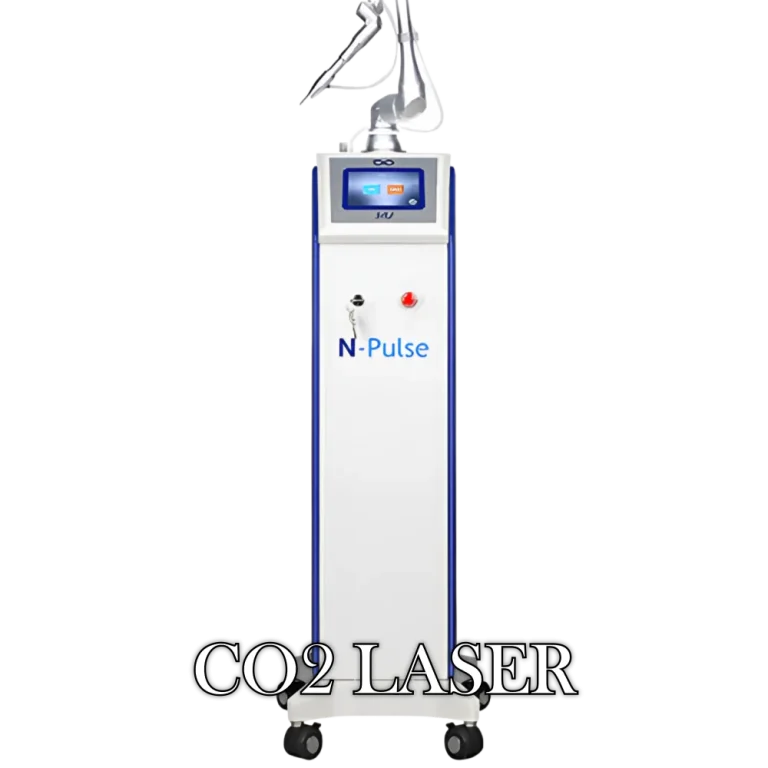
CO2 레이저
CO₂ 레이저는 10,600nm 파장으로 조직을 기화시켜 점·쥐젖·사마귀 같은 병변을 제거하는 레이저입니다. 병변을 먼저 진단한 뒤 깊이를 정하며, 깊이에 따라 딱지와 붉음, 흉터나 색소침착 가능성과 재생 관리 방법이 달라집니다.
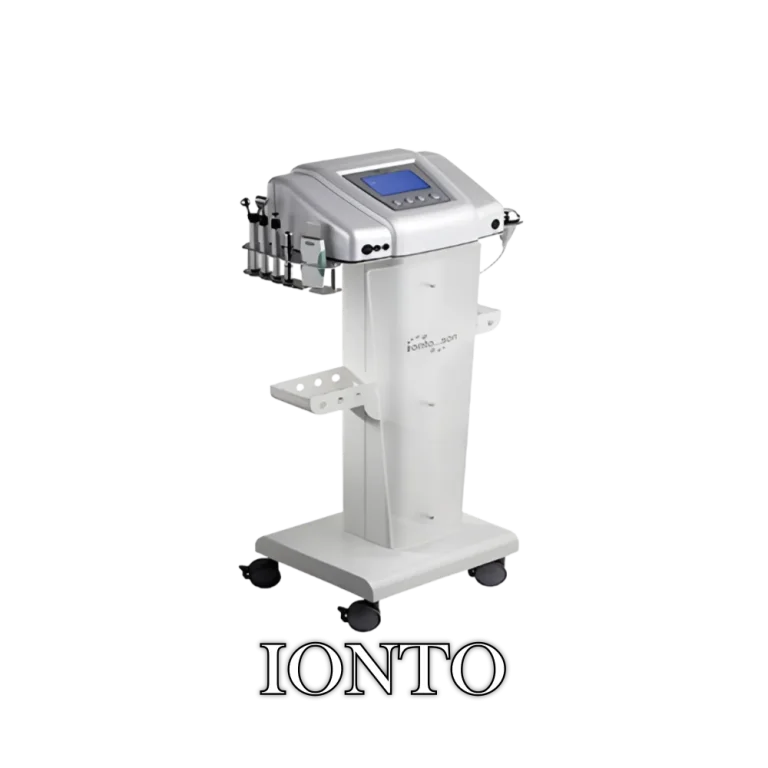
이온토
이온토는 약한 직류 전류로 비타민C 같은 유효 성분이 피부 속으로 더 잘 스며들게 돕는 관리입니다. 사용 성분과 피부 민감도, 금기 사항을 확인한 뒤 적용하며, 피부 질환의 진단이나 원인 치료를 대신하지는 않습니다.