Lentigo & Blemish · Mellow Dermatology (Yeongdeungpo)
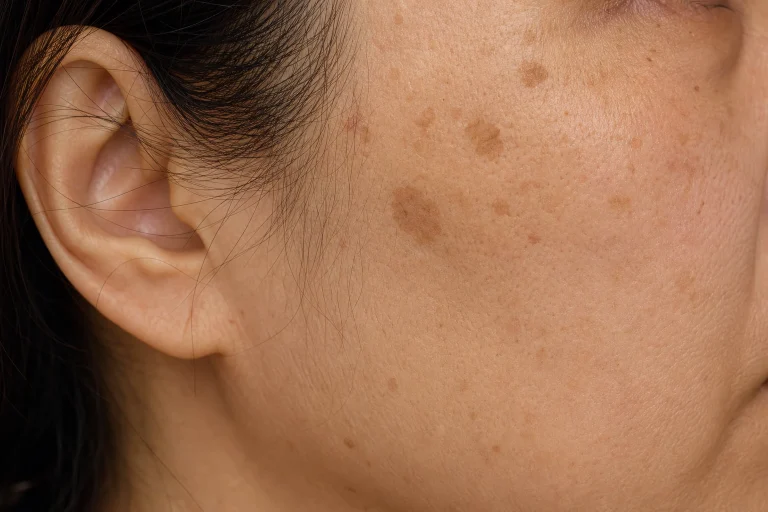
A brown spot shaped like a mole —
lentigo or melasma?
Lentigo and blemishes differ from melasma in cause, depth and treatment. We show you how Mellow treats lentigo and blemishes — pinpointing exactly where the pigment lies and selectively clearing melanin without irritation.
Lentigo vs Melasma
They look alike, but
lentigo, blemishes and melasma are different
Both are brown pigment, but if the edges are sharp and it sits like an embedded spot, it may be lentigo or a blemish; if it spreads faintly across a wide area, it may be melasma. Telling them apart is where treatment begins.
Lentigo · Blemish
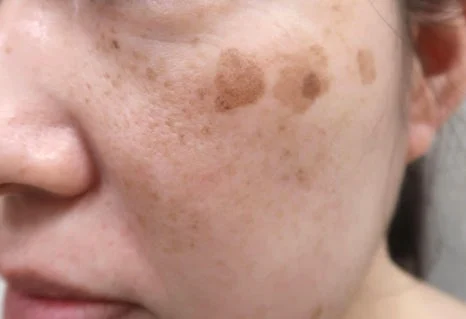
Lentigo · Blemishes
Sharply defined brown spots that appear embedded like moles. They usually sit in the epidermis and are caused by UV and aging, so they tend to respond well to laser.
Melasma
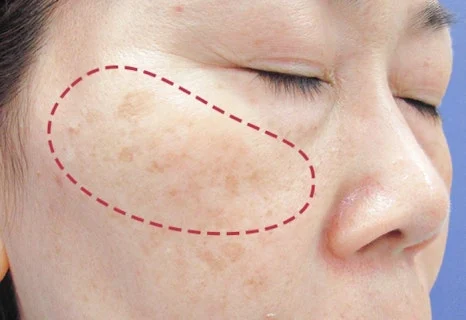
Melasma
Pigment with blurred edges that spreads wide and symmetrically. It reaches across both the epidermis and dermis and is driven by hormones and UV, so unlike lentigo it must be treated gently at low power over time.
Why It Forms
Why do lentigo and blemishes
form and multiply?
When accumulated UV exposure meets skin aging, melanin builds up in concentrated spots. With age, a lentigo that has once appeared rarely fades and gradually increases.
Cause 01 · UV
Accumulated UV exposure
Years of UV exposure overproduce melanin, leaving brown spots on the face, backs of the hands and arms.
Cause 02 · Aging
Slower skin renewal
As we age, the skin's renewal capacity declines, so a lentigo that has once appeared rarely fades and gradually multiplies.
Cause 03 · Melanin
Localized melanin excess
Melanocytes become activated in localized areas, and sharply defined pigment takes hold.
Treatment Principle
The approach changes
with the depth
The key to treating lentigo is removing melanin “selectively.” We design the wavelength and method differently depending on whether the pigment is shallow or deep, and whether it is raised.
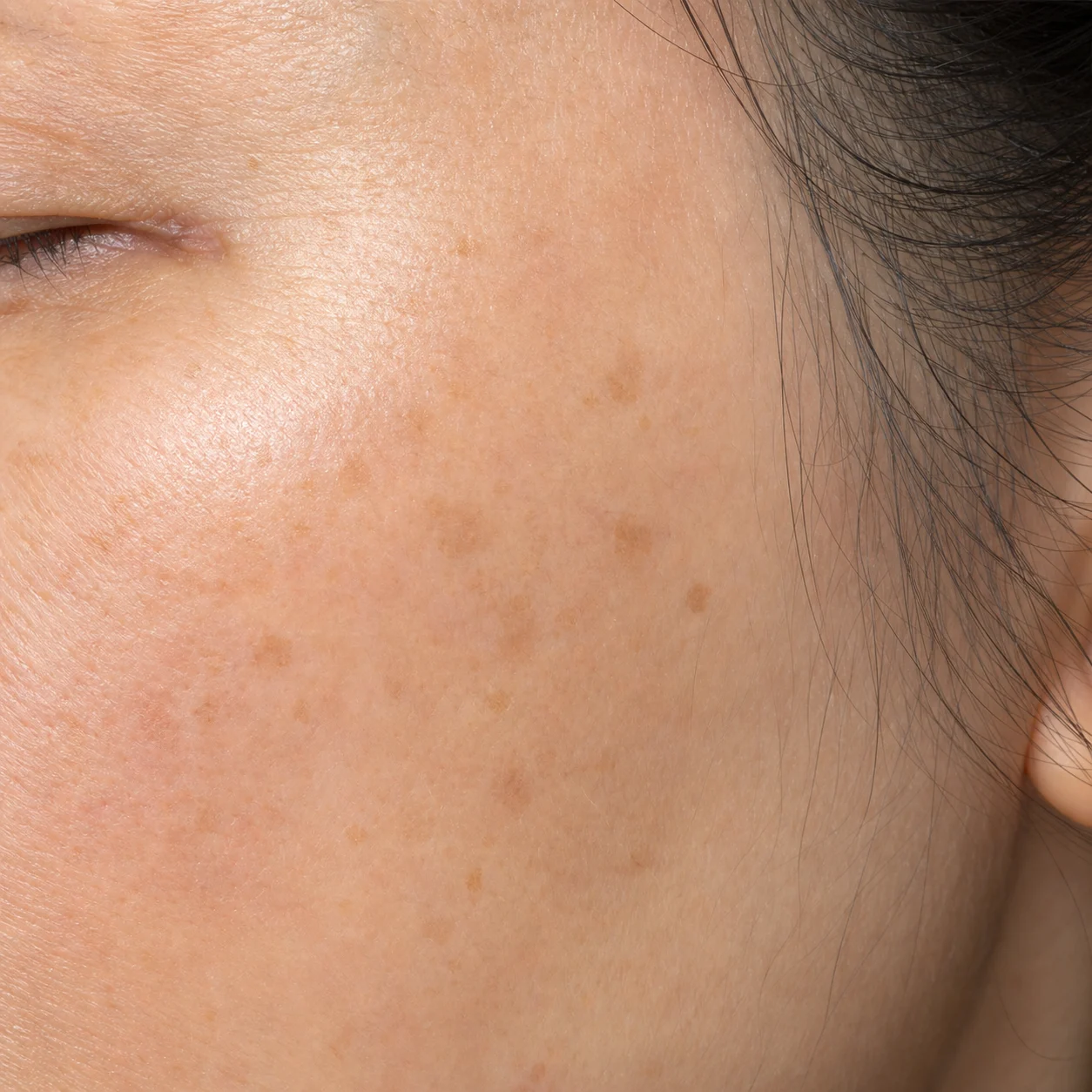
Flat lentigo · blemishes
Flat pigment in the shallow epidermis is selectively broken down by Pico and toning lasers. Damage to surrounding tissue is minimal.
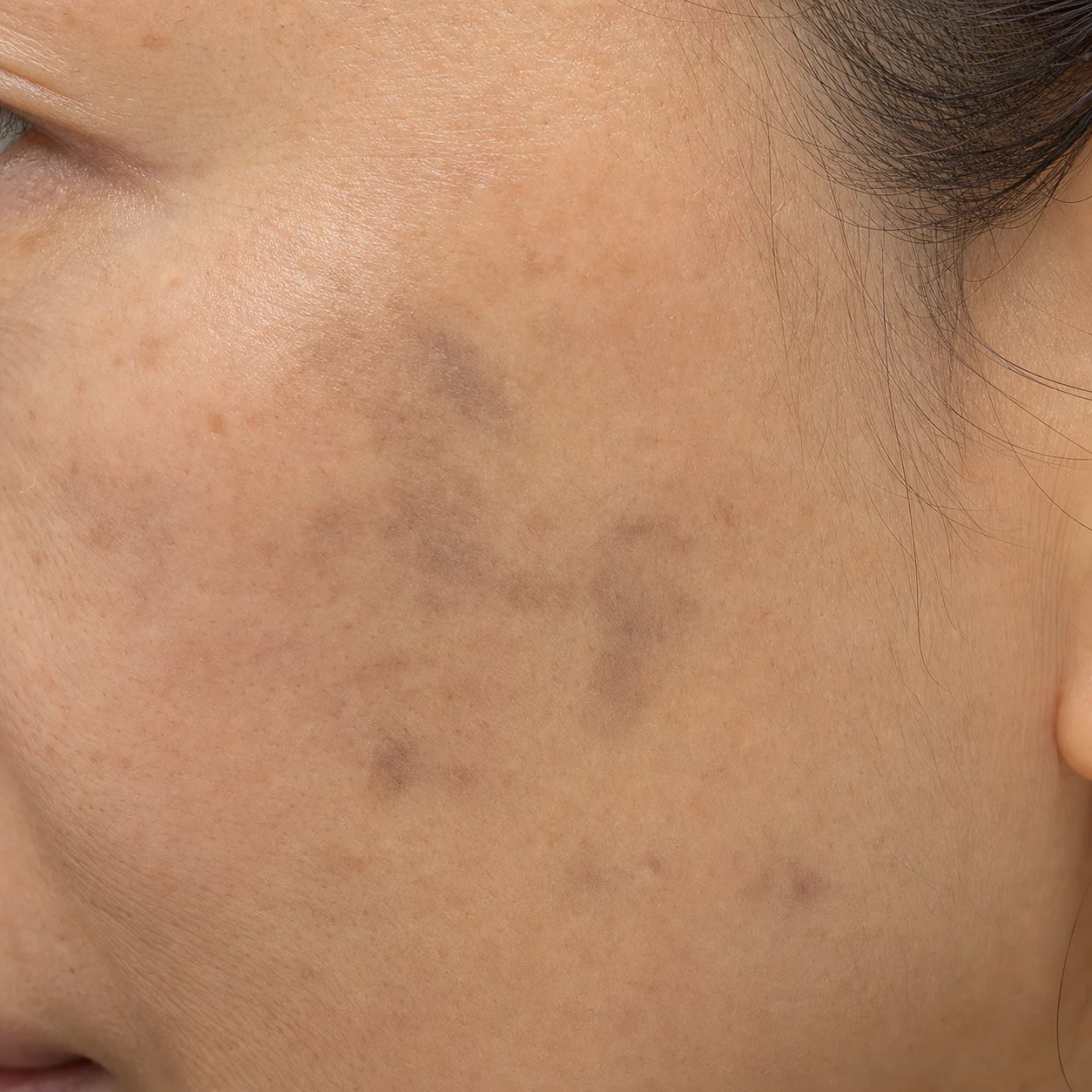
Slightly deeper pigment
Pigment reaching into the upper dermis is approached in stages, adjusting the wavelength to match its depth.
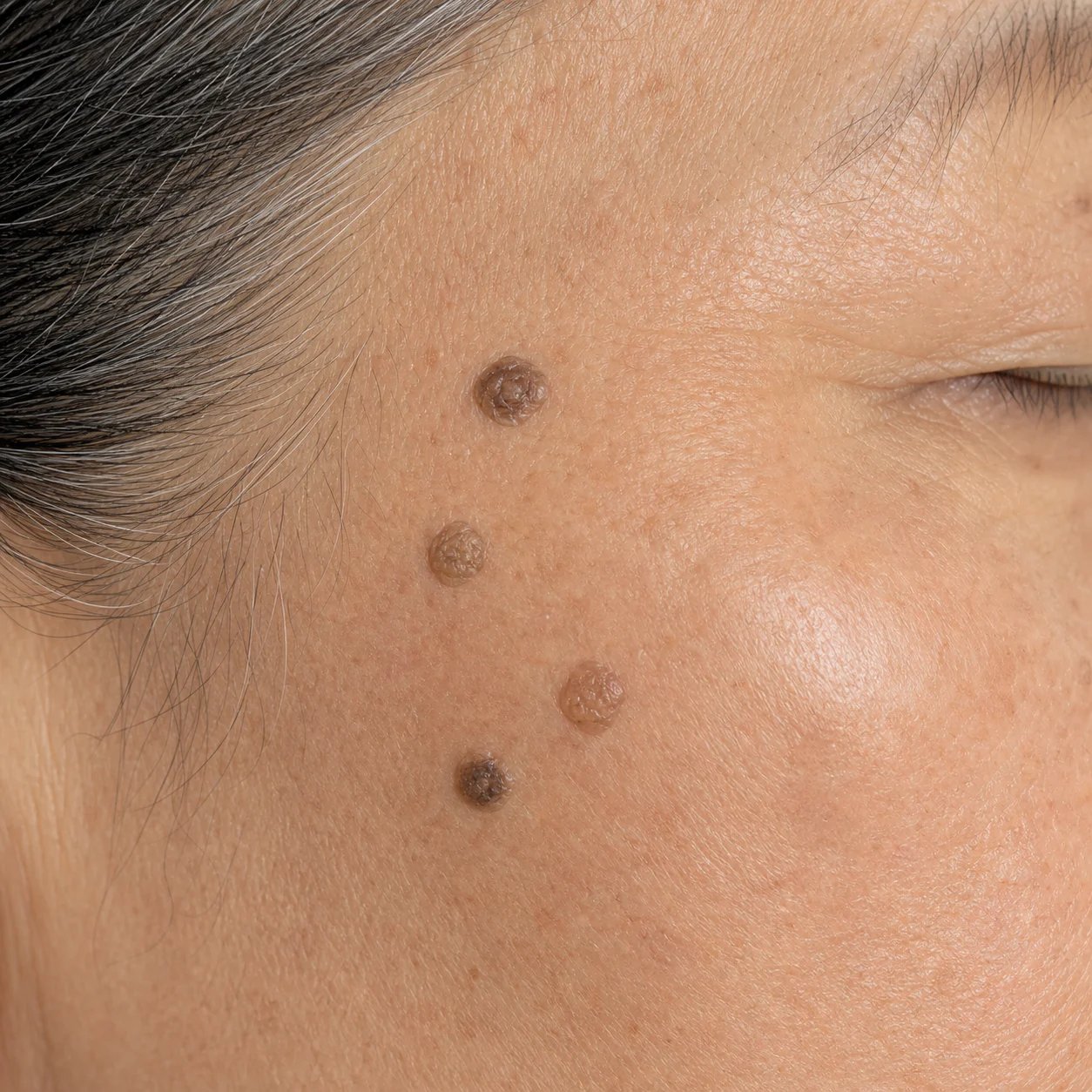
Raised seborrheic keratosis
Seborrheic keratosis that protrudes above the surface is precisely removed by directly ablating it with Erbium and CO2 lasers.
Devices
We choose the wavelength
to match the pigment's depth
Flat lentigo, multiple pigment spots, raised seborrheic keratosis — each lesion calls for a different laser. We combine the role of each device to clear it without irritation.
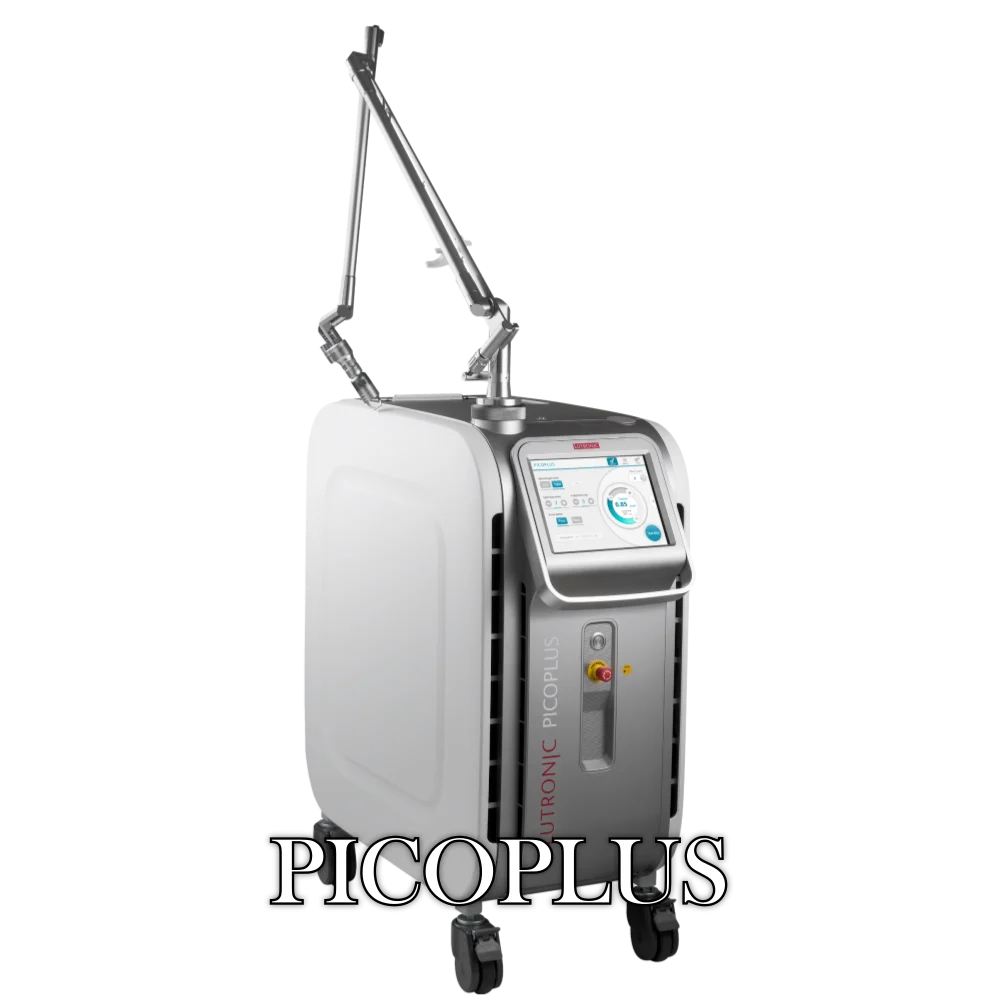
Pico Plus · 532nm Picosecond
Pico Plus
Epidermal lentigo · blemishesA 532nm picosecond pulse selectively destroys melanin in the epidermal layer, clearing flat lentigo and blemishes without damaging the surrounding tissue.
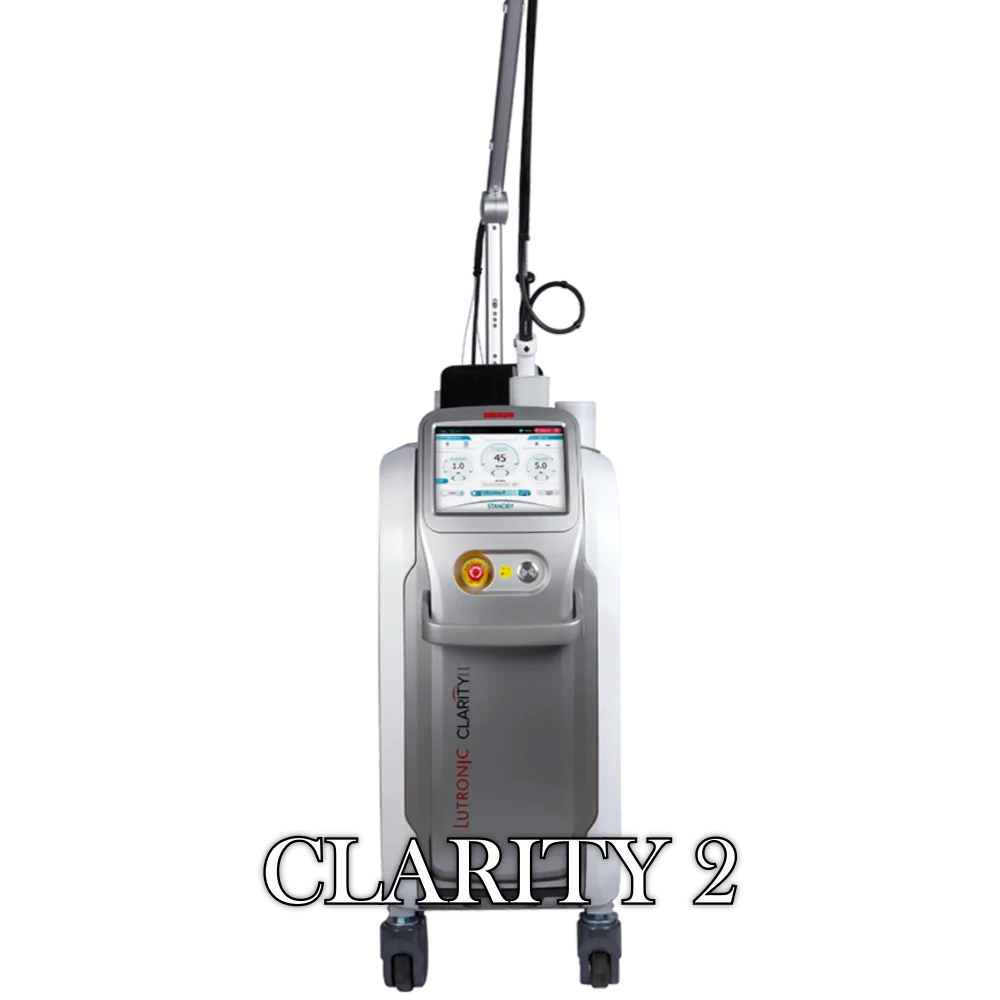
Clarity II · 755nm Alexandrite
Clarity II
Multiple lesions · upper dermisThe 755nm alexandrite reaches into the upper dermis, evenly clearing multiple lentigines and pigment across broad areas.

Hollywood Spectra · Toning
Hollywood Spectra
Laser toningAfter applying a carbon lotion, laser toning gently clears pigment and evens out the skin tone.
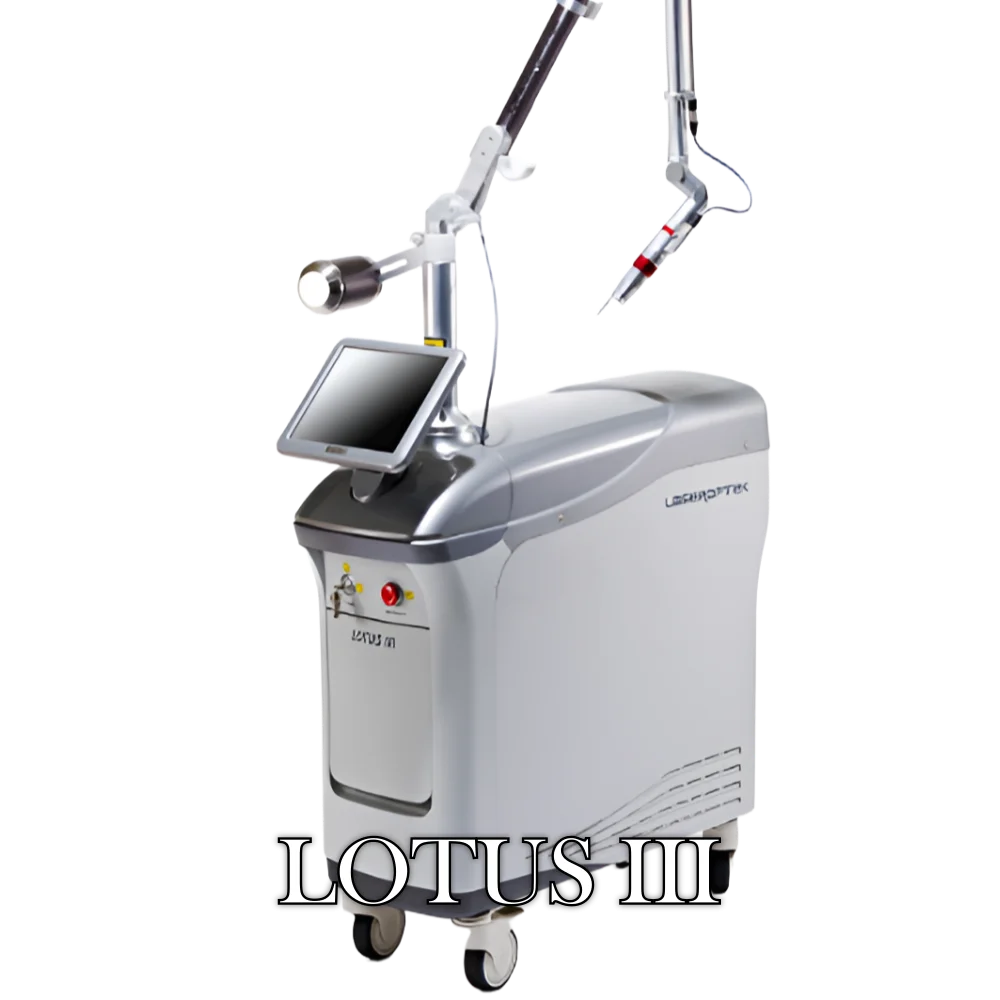
Lotus III · 2940nm Er:YAG
Lotus III
Precise seborrheic keratosis removalThe 2940nm Er:YAG precisely ablates raised seborrheic keratosis from the surface. Smoothing it layer by layer reduces the risk of scarring.
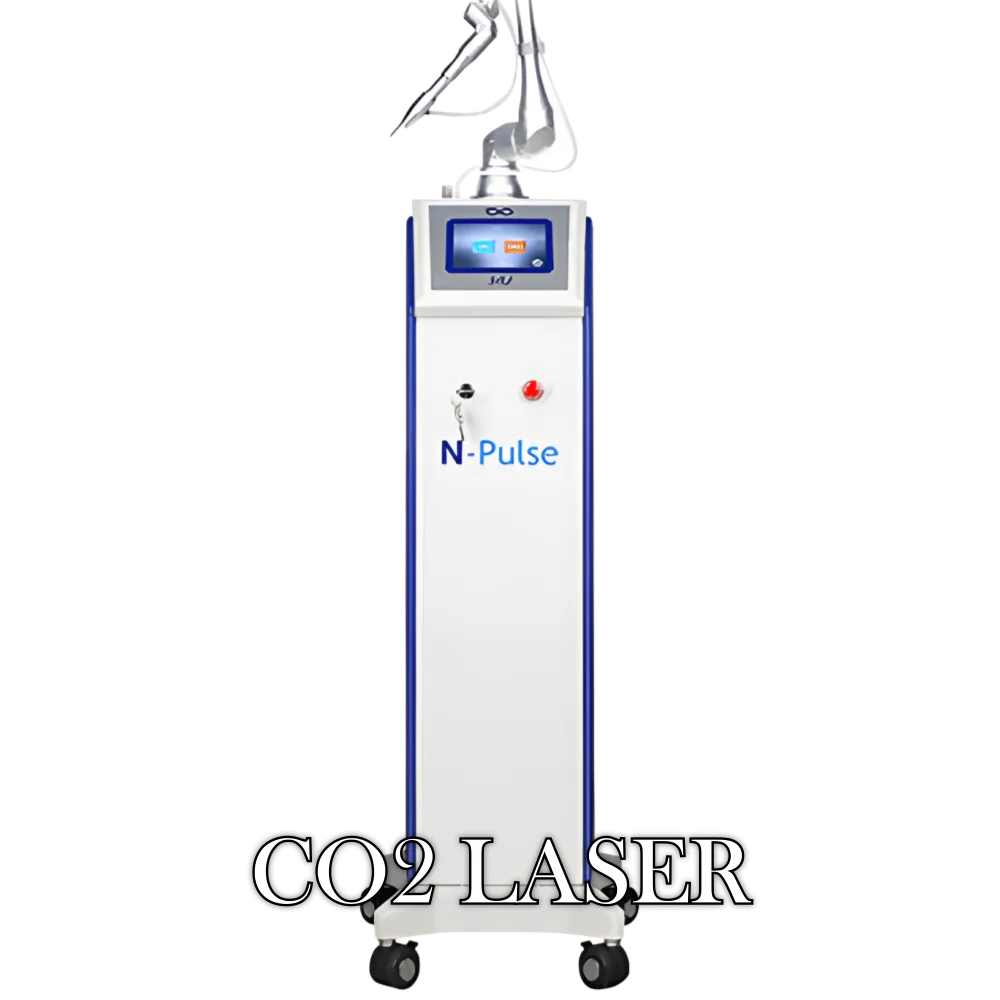
CO2 · 10,600nm Ablative
CO2 Laser
Epidermal lesions · one-dayThe 10,600nm CO2 laser removes thick, raised seborrheic keratosis and epidermal lesions. A one-day procedure that clears them the same day, matched to depth, is possible.
At a Glance
The device lineup at a glance
| Device | Wavelength · method | Typical target |
|---|---|---|
| Pico Plus | 532nm picosecond | Flat lentigo · blemishes |
| Clarity II | 755nm alexandrite | Multiple · upper-dermis lentigo |
| Hollywood Spectra | Laser toning (carbon) | Pigment · skin tone |
| Lotus III | 2940nm Er:YAG | Raised seborrheic keratosis |
| CO2 Laser | 10,600nm ablation | Thick seborrheic keratosis |
※ Treatment effects and responses may vary from person to person, and side effects may occur.
Real Results
Real treatment reviews
Real treatment reviews from patients who improved their lentigo and blemishes at Mellow Dermatology (Yeongdeungpo). Tap a card to read the full review.
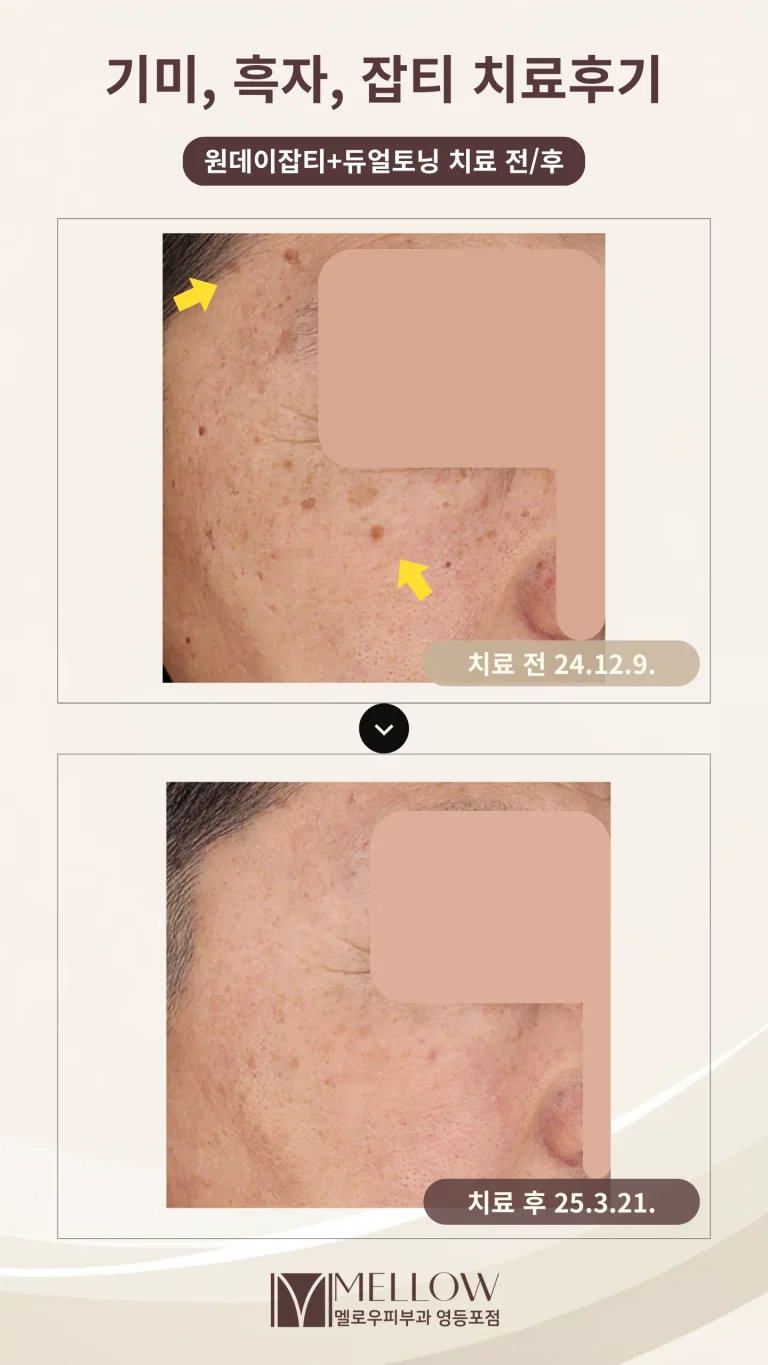
Treatment Review
Man in his 60s: lentigo · melasma · blemish treatment review
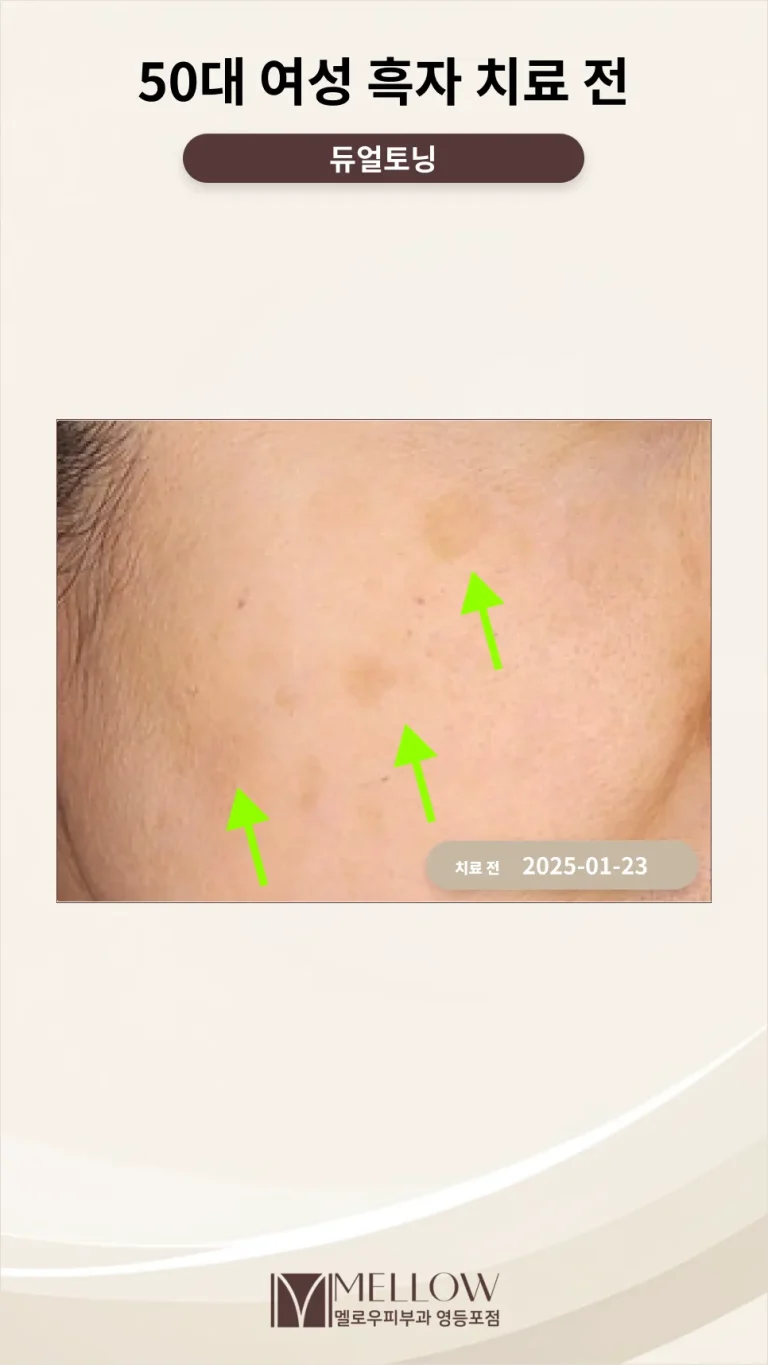
Treatment Review
Woman in her 50s: lentigo removal review
Treatment Review
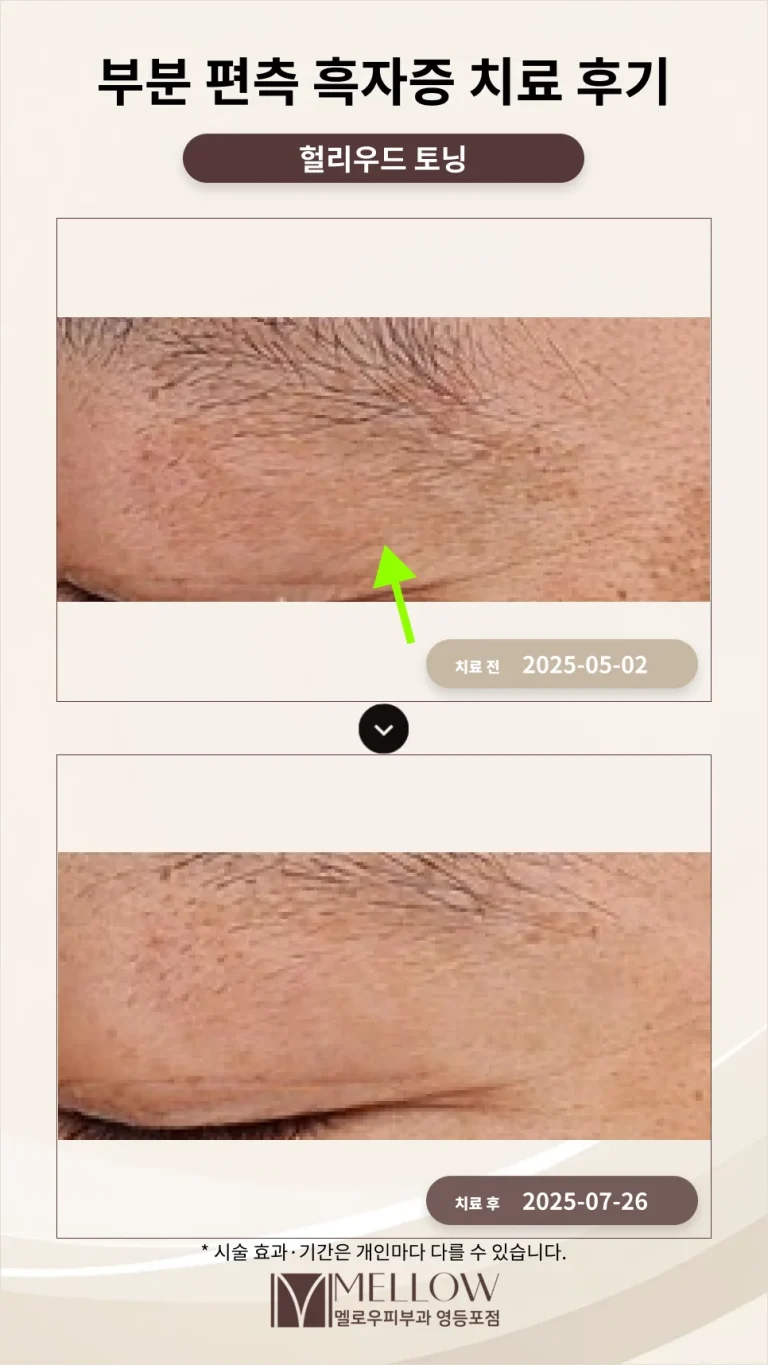
Man in his 50s: partial unilateral lentiginosis treatment review
Treatment Review
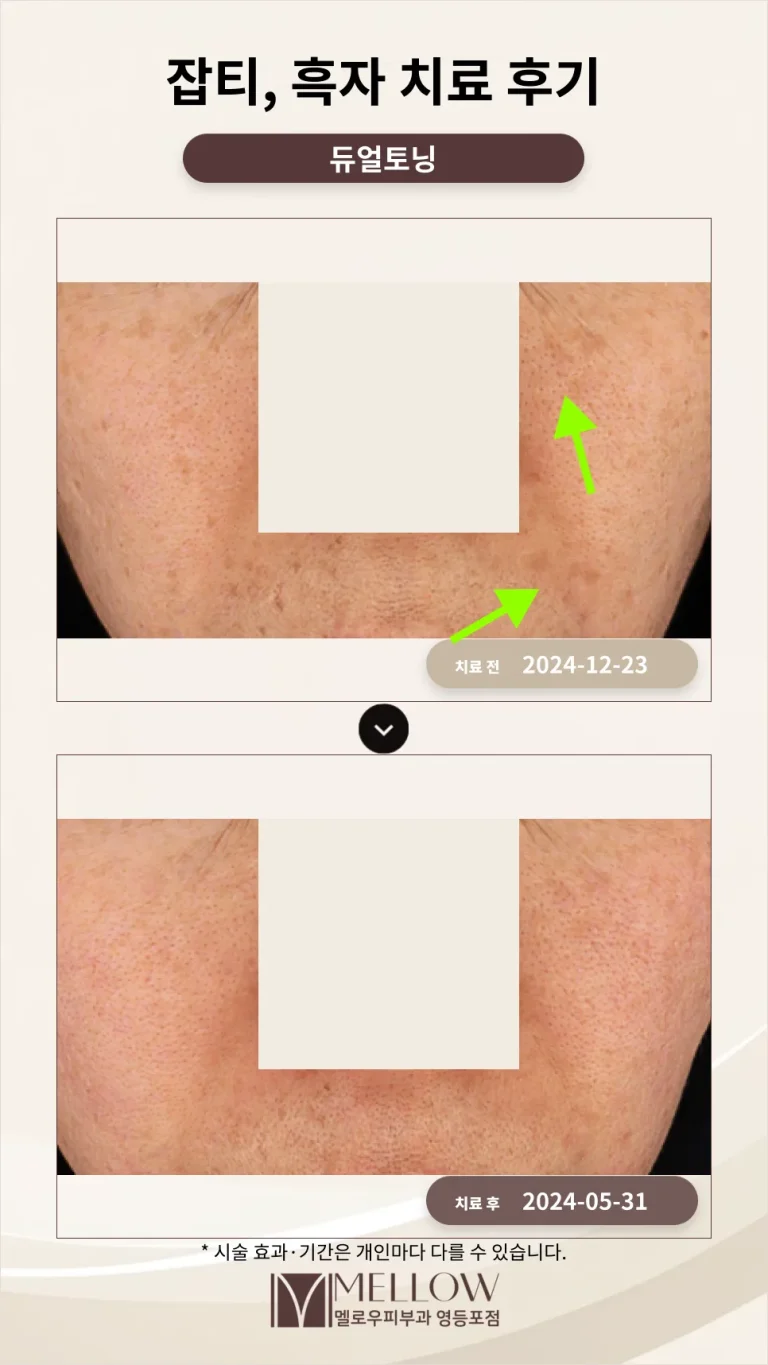
Woman in her 50s: blemish · lentigo laser toning review
Treatment Review
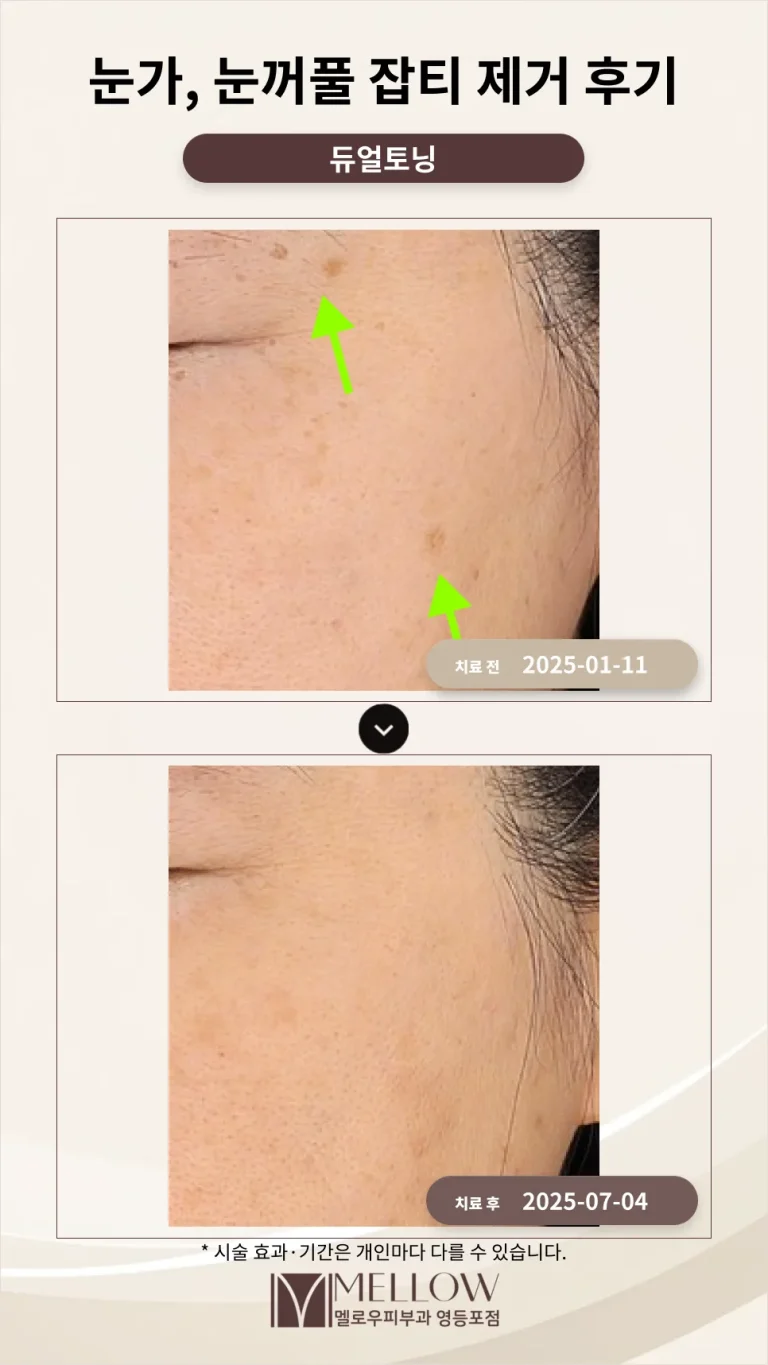
Woman in her 40s: under-eye · eyelid blemish removal review
Treatment Review
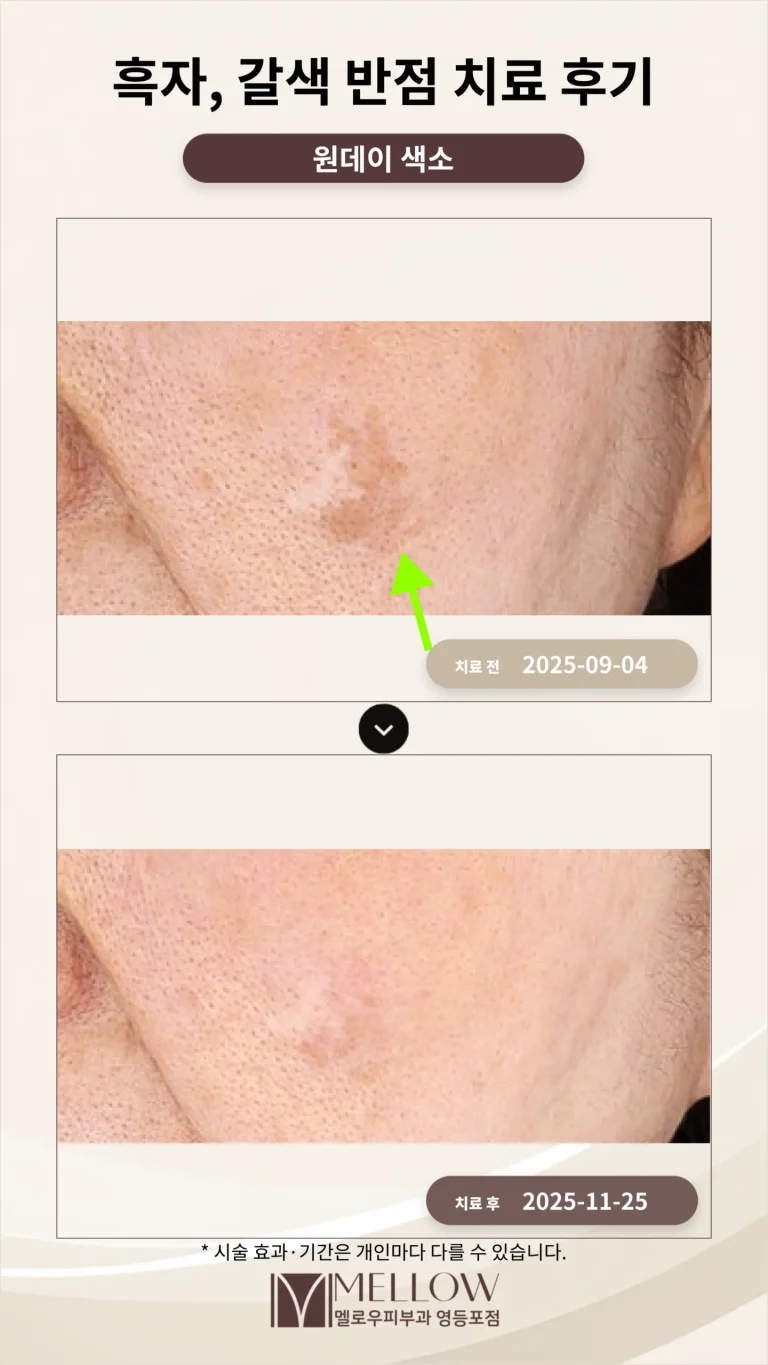
In their 60s: lentigo · brown spot one-day pigment review

Expert Care
Pigment isn't about erasing —
it's about “slow and safe”
Dr. Kwon Hyung-il, Director · Dermatology Specialist
Trying to remove a pigmented lesion all at once with high intensity can instead irritate the melanocytes and leave behind yet another patch of pigmentation.
Even if it is slower, clearing it thoroughly and safely while minimizing side effects is the heart of treating lentigo and blemishes. Instead of self-diagnosis or excessive intensity, the depth and wavelength should be matched through a specialist's diagnosis.
★ Mellow's principles for treating lentigo · blemishes
- Design the wavelength by depth after differentiating lentigo, blemishes and melasma
- Divide the treatment gently rather than one strong session
- UV and brightening care after the procedure to prevent pigmentation
Before & After Care
The harder you try to erase pigment,
the darker it can become
Removing a pigmented lesion all at once with high intensity can actually trigger irritant hyperpigmentation. Treat it safely in divided sessions, even if slower, and because UV is the biggest cause of recurrence after a procedure, avoid the sun for at least 1–2 weeks, use sunscreen consistently, and take care to keep the skin moisturized.
First, find out whether your brown spot
is a lentigo or melasma
From lentigo and blemishes to seborrheic keratosis, find the pigment treatment that's right for you with the differential diagnosis at Mellow Dermatology (Yeongdeungpo).
See treatment reviews →Equipment
이 진료에 함께 쓰는 장비
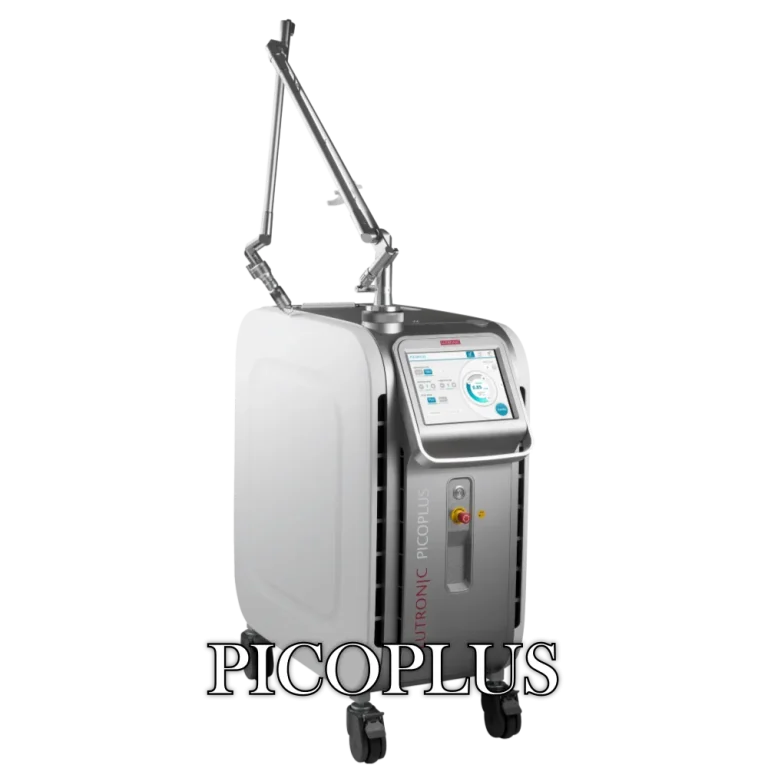
피코플러스
피코플러스는 피코초 단위의 아주 짧은 펄스로 색소 입자를 잘게 부수는 레이저로, 기미·잡티·주근깨와 피부톤 관리에 씁니다. 색소의 종류와 깊이에 따라 파장과 강도, 횟수가 달라지고, 기미는 자극을 받으면 오히려 짙어질 수 있어 정확한 감별이 먼저입니다.
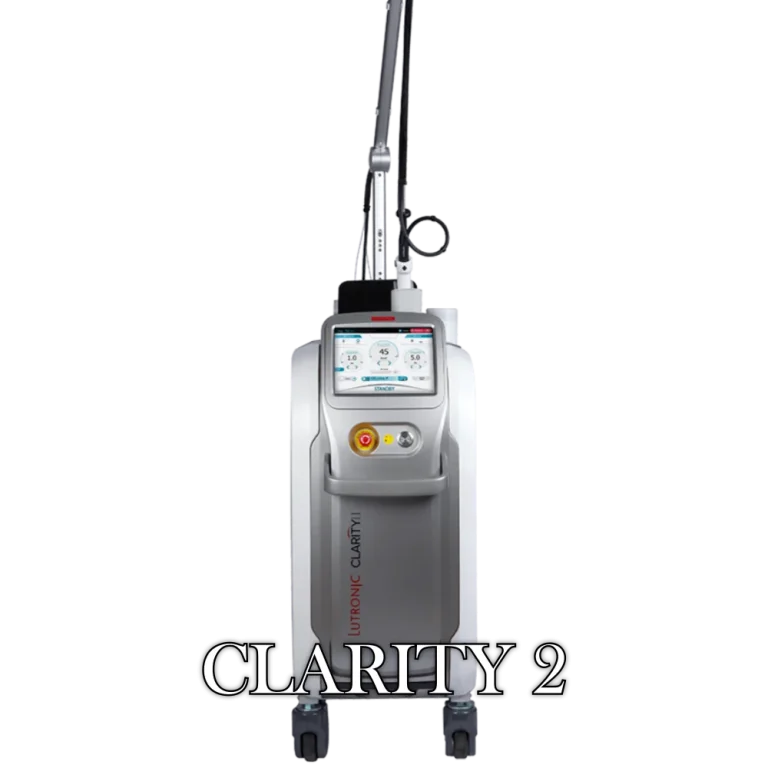
클라리티2
클라리티2는 755nm 알렉산드라이트와 1064nm 엔디야그 파장을 한 장비에서 바꿔 쓰는 레이저로, 주로 제모에 사용합니다. 피부톤과 모발의 굵기·색, 부위에 따라 파장과 에너지를 고르며, 필요한 횟수와 피부 반응은 사람마다 다릅니다.

헐리우드스펙트라
헐리우드스펙트라는 1064nm와 532nm 파장의 Q-스위치 엔디야그 레이저로, 낮은 에너지를 여러 번 나눠 조사하는 토닝으로 기미와 잡티를 관리합니다. 탄소 로션을 쓰는 헐리우드필 모드로 모공과 피지 관리도 하며, 색소가 옅어지는 속도와 필요한 횟수에는 개인차가 있습니다.
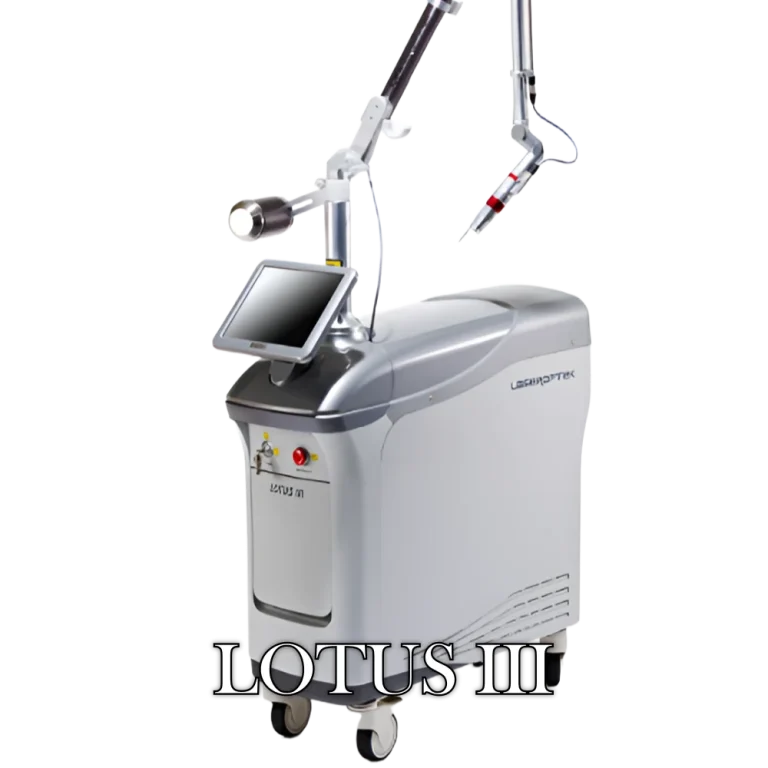
로터스3
로터스3는 2940nm 어븀야그 레이저로, 피부를 아주 얇고 정밀하게 깎아 잡티·비립종·쥐젖 같은 표면 병변을 없애고 피부결을 다듬습니다. 병변의 깊이와 부위에 따라 회복 기간이 달라지고 딱지나 붉음, 색소침착이 생길 수 있어 진단 후 범위를 정합니다.
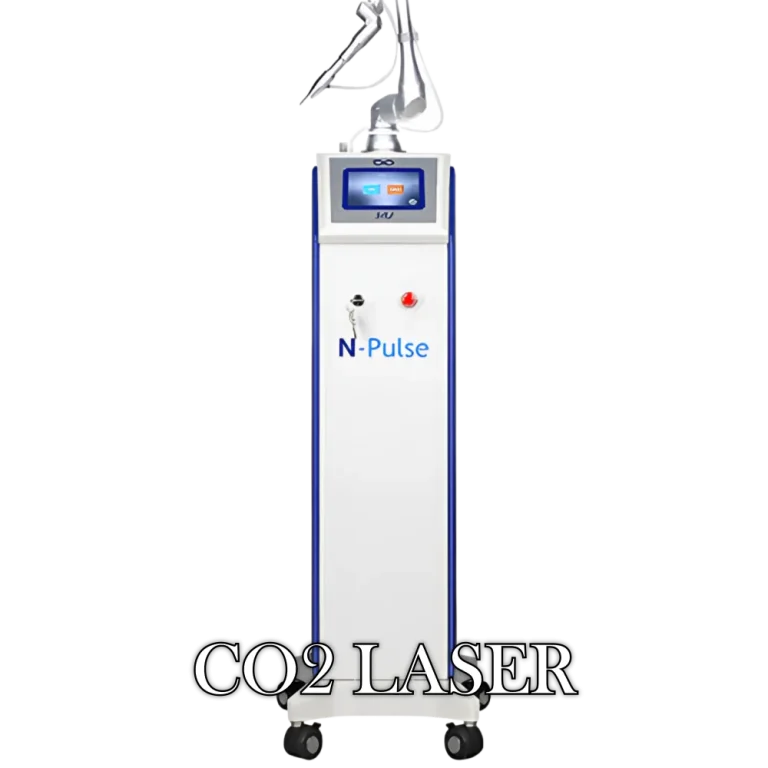
CO2 레이저
CO₂ 레이저는 10,600nm 파장으로 조직을 기화시켜 점·쥐젖·사마귀 같은 병변을 제거하는 레이저입니다. 병변을 먼저 진단한 뒤 깊이를 정하며, 깊이에 따라 딱지와 붉음, 흉터나 색소침착 가능성과 재생 관리 방법이 달라집니다.